
Blog — botany
How many morel
species?
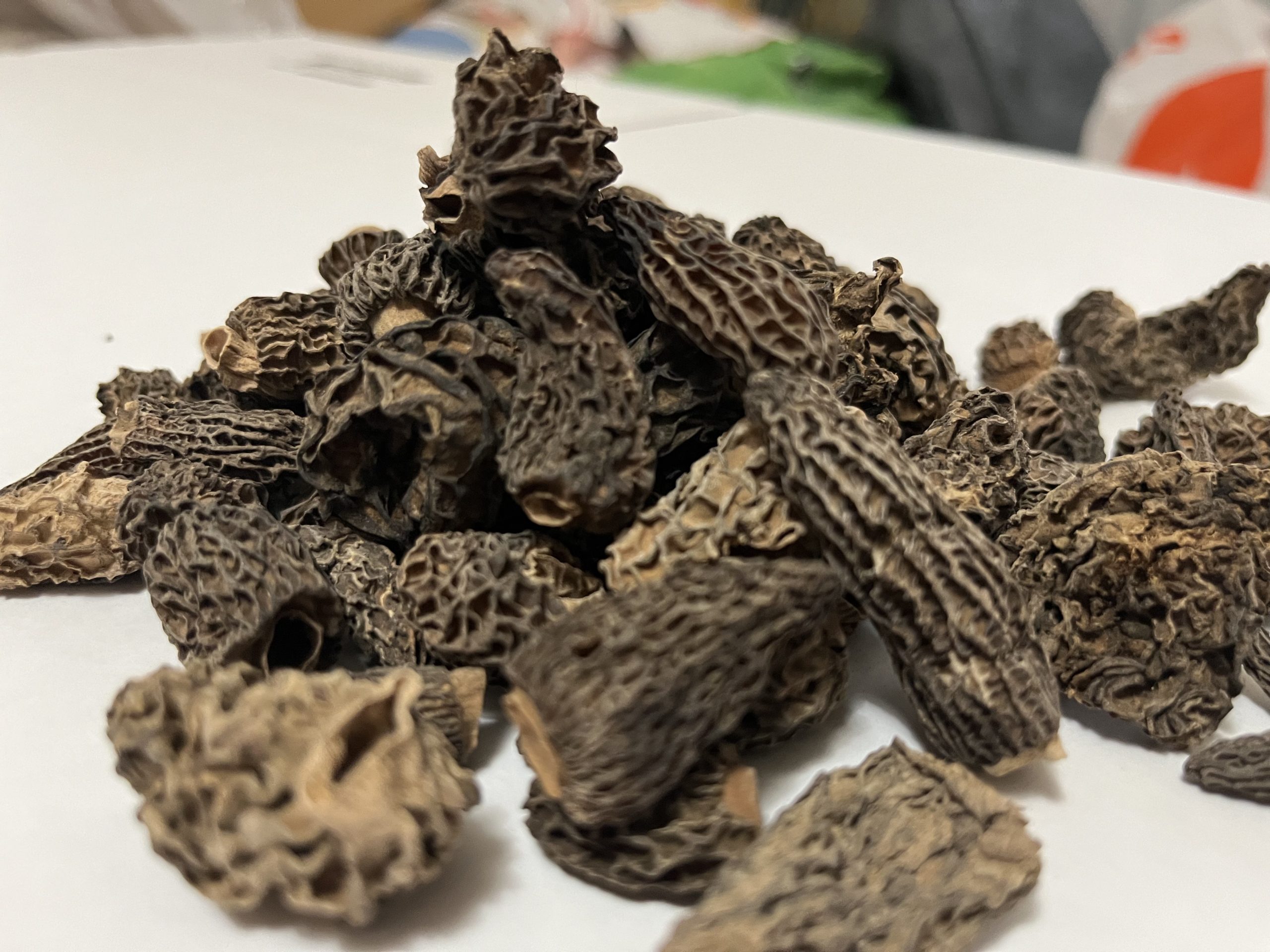
In cooking, we speak of black morel, yellow morel, conical morel — three or four names at most. Genetic studies tell a different story: behind these few names lie dozens of species.
Three main groups.
Researchers divide morels into three main groups:
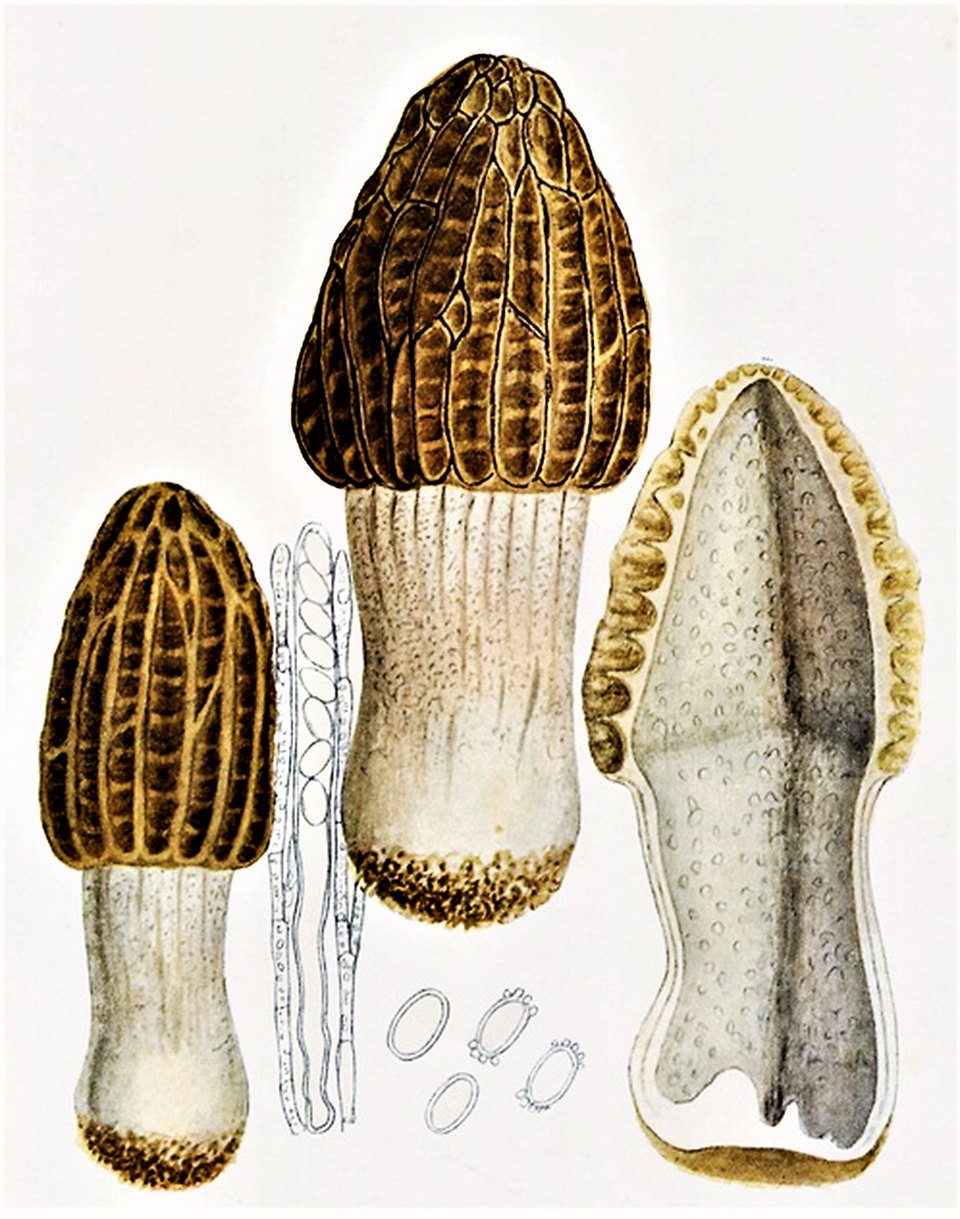
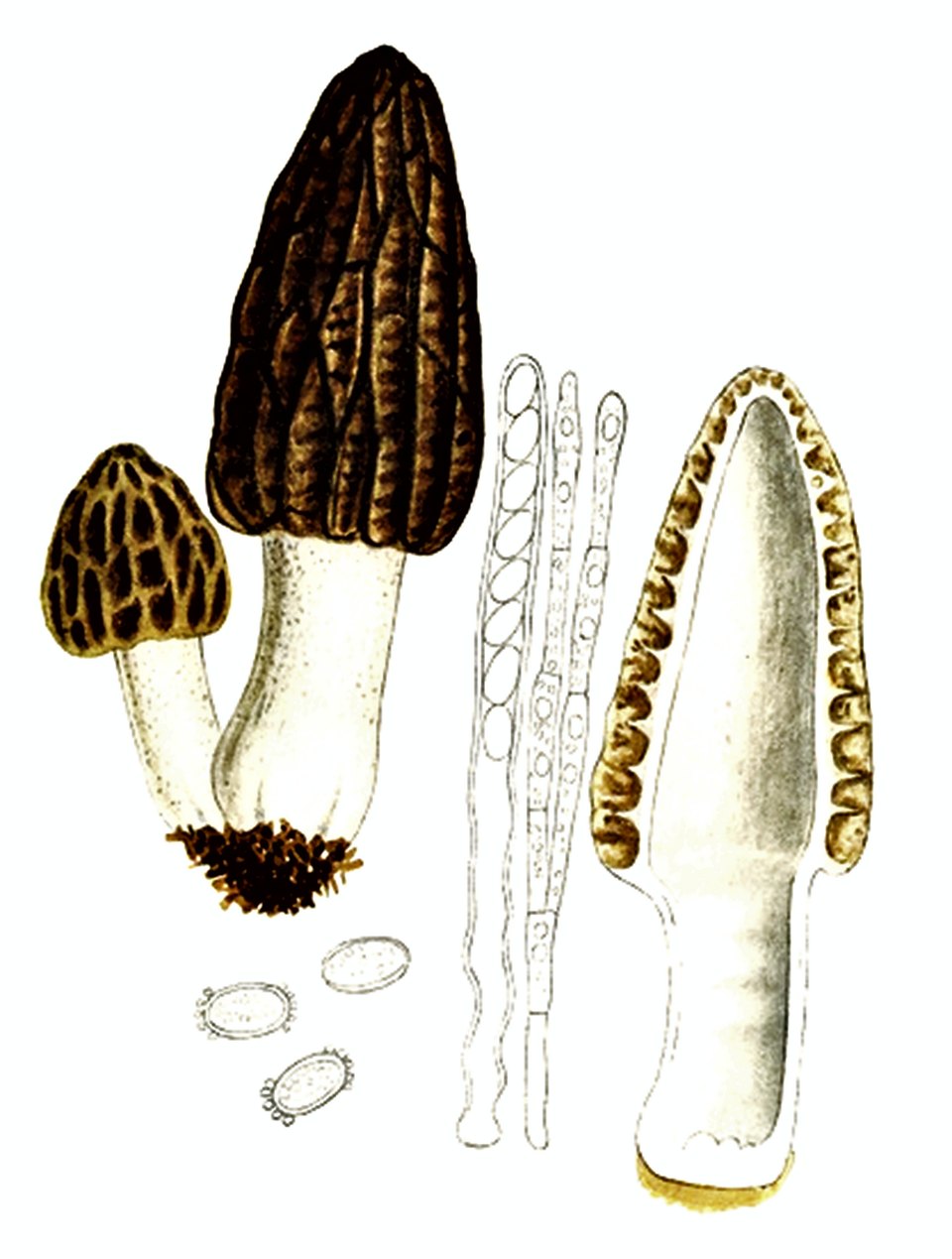
- Black morels (group Elata): dark cap, often conical. This is the richest group in species and the one cultivated in China.
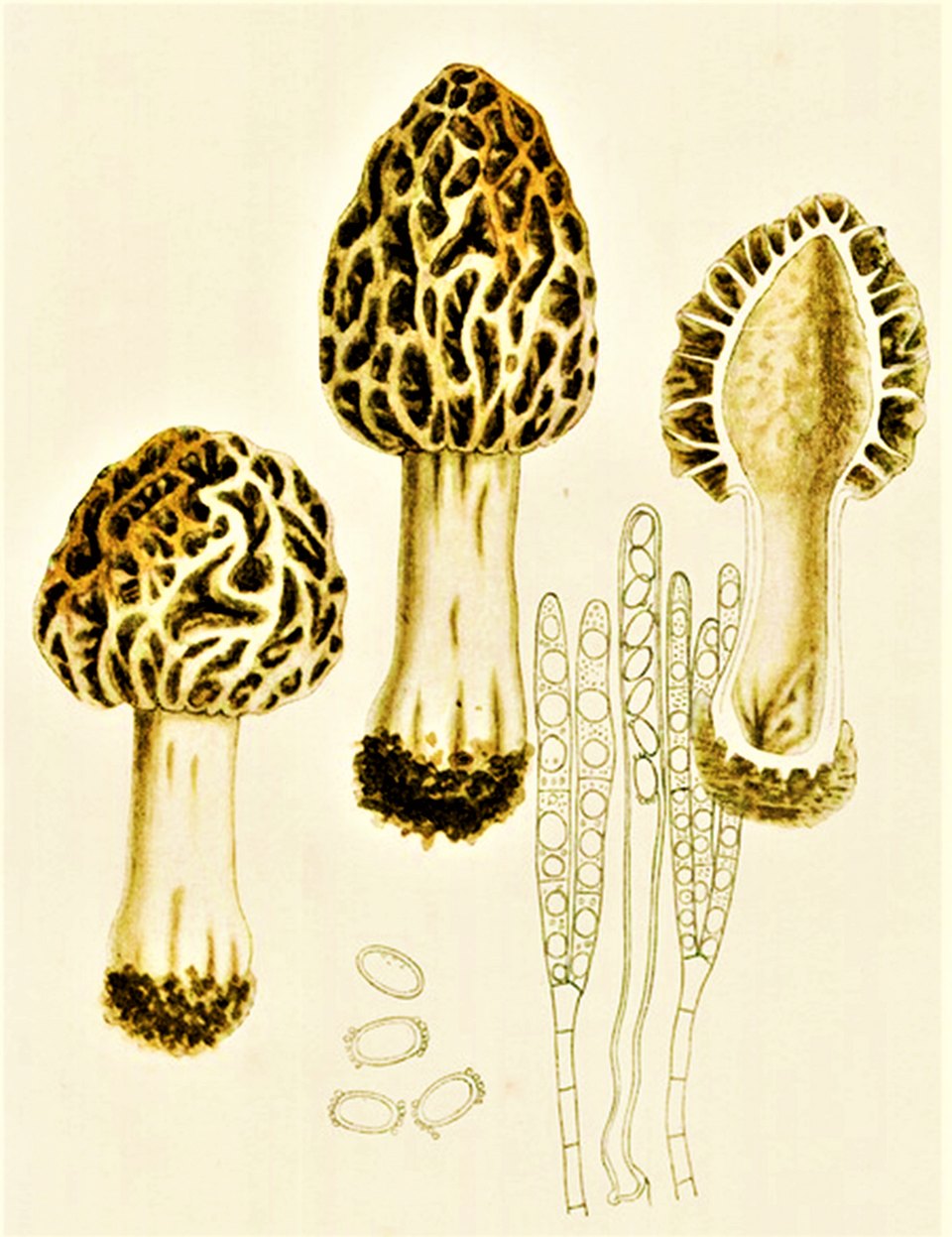
- Yellow morels (group Esculenta): light yellow to brown cap, more rounded.
- White morels (group Rufobrunnea): a very small group.
A count that keeps rising.
- A first genetic count found 41 species: 24 black morels, 16 yellow and 1 white.
- In 2015, a reference study on Europe and North America (Richard et al.) counted 65 recognised species worldwide, of which only 30 have a name. It found 21 in Europe and 22 in North America; only 7 grow on both continents.
- In 2019, a new review (Petrželová and Sochor) reached 76 species worldwide. In the Czech Republic alone, it distinguished 11, of which only 6 could be linked without hesitation to a published name.
Why so many species without a name?
Many morels look so similar that they cannot be distinguished by sight: only DNA analysis shows they are different species. The old names, given based on shape and colour, therefore often cover several species at once — and mycologists have not yet finished naming them.
And on your plate?
For cooking, this diversity changes little: all morels are prepared in the same way, and all must be cooked for at least 20 minutes. The morels cultivated in China belong to the black morel group. For our wild morels from the Himalayas and Anatolia, the exact species can only be determined after genetic analysis: what distinguishes them in cooking is their flavour.
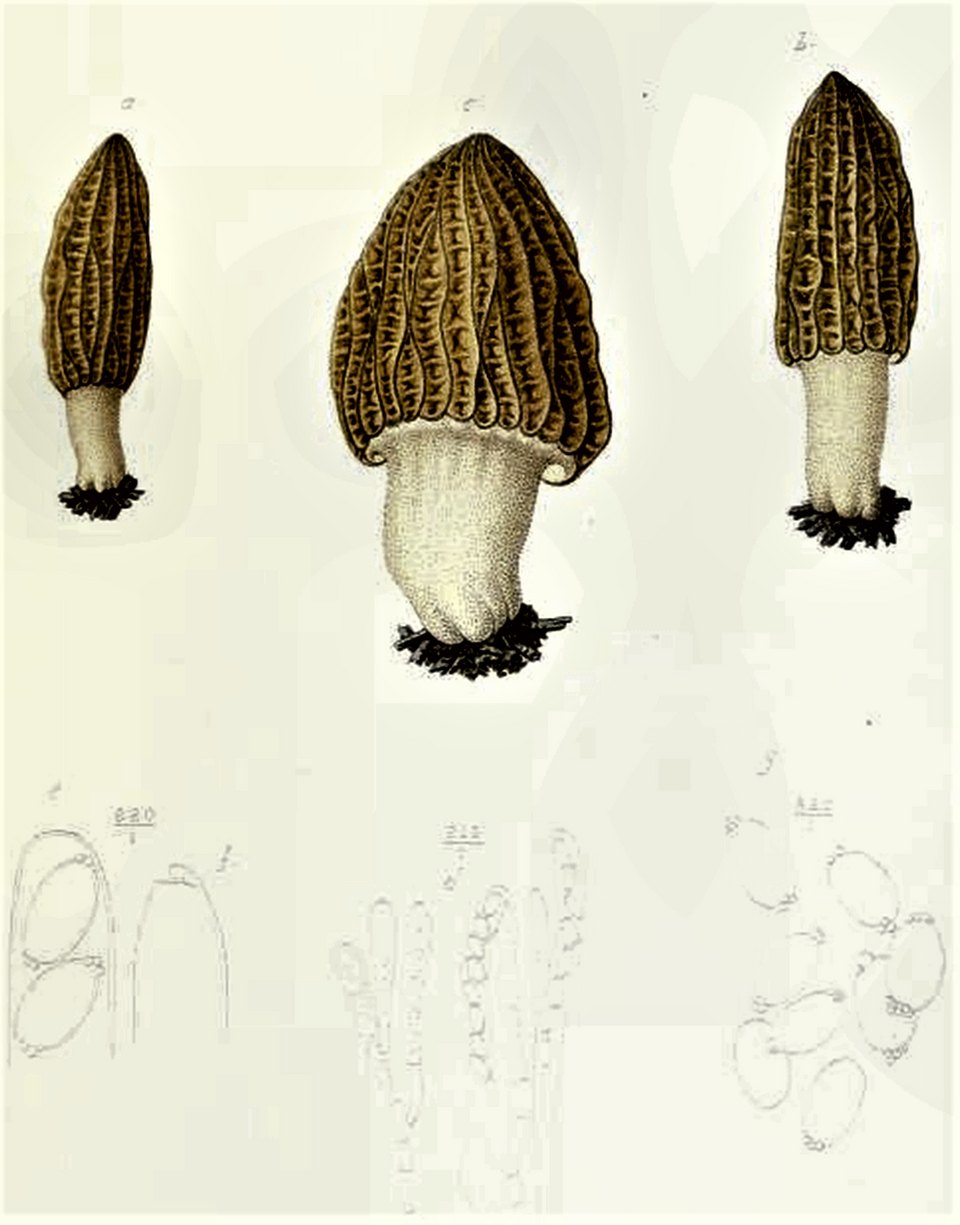
Sources: F. Richard et al., Mycologia, 2015 (65 species, of which 30 named; Europe and North America); B. Petrželová and M. Sochor, MycoKeys, 2019 (76 species, three groups, earlier count of 41). Plates: Wikimedia Commons, public domain.
Further reading
Cultivation
in China
From 200 to 16,466 hectares in ten years, three cultivated species, and a cultivation that is only regularly profitable for 3 out of 10 producers.
Read →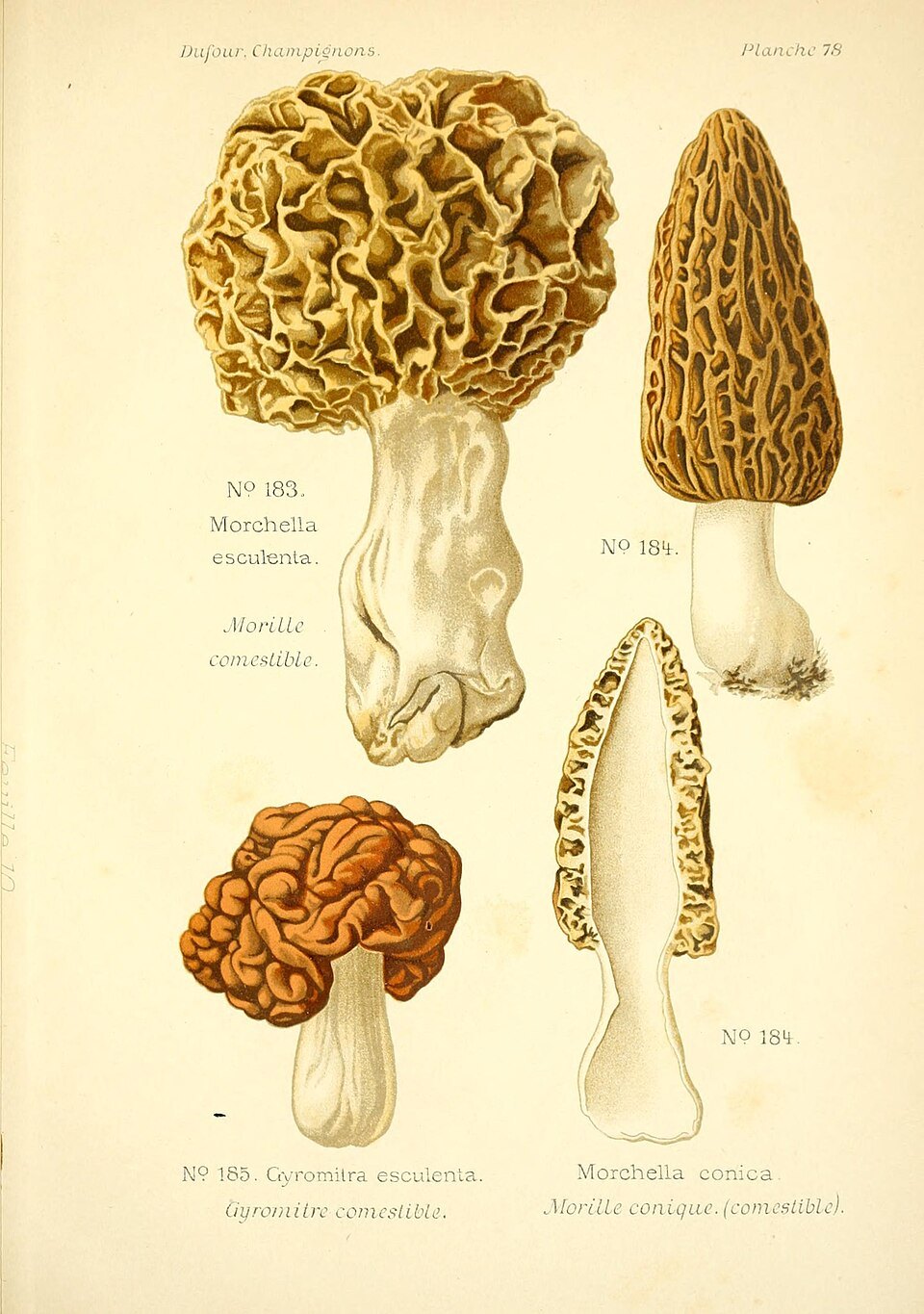
Morel or
false morel?
Pits versus brain-like folds, single cavity versus partitioned interior: how to identify the Gyromitra, and why cooking does not make it safe.
Read →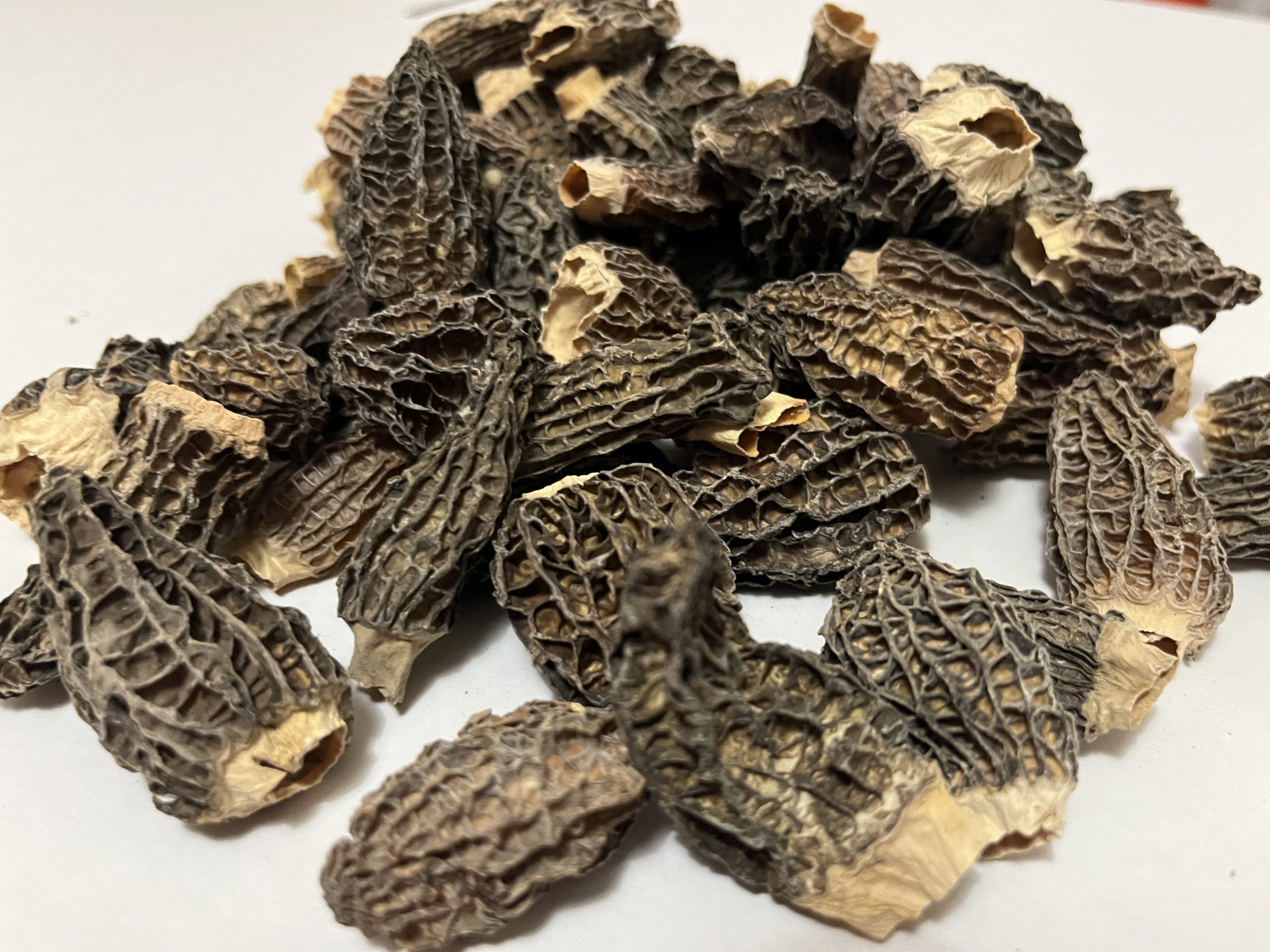
The morel
around the world
Its name in 21 languages, from Bulgarian to Ukrainian — the complete list from the old site.
Read →