
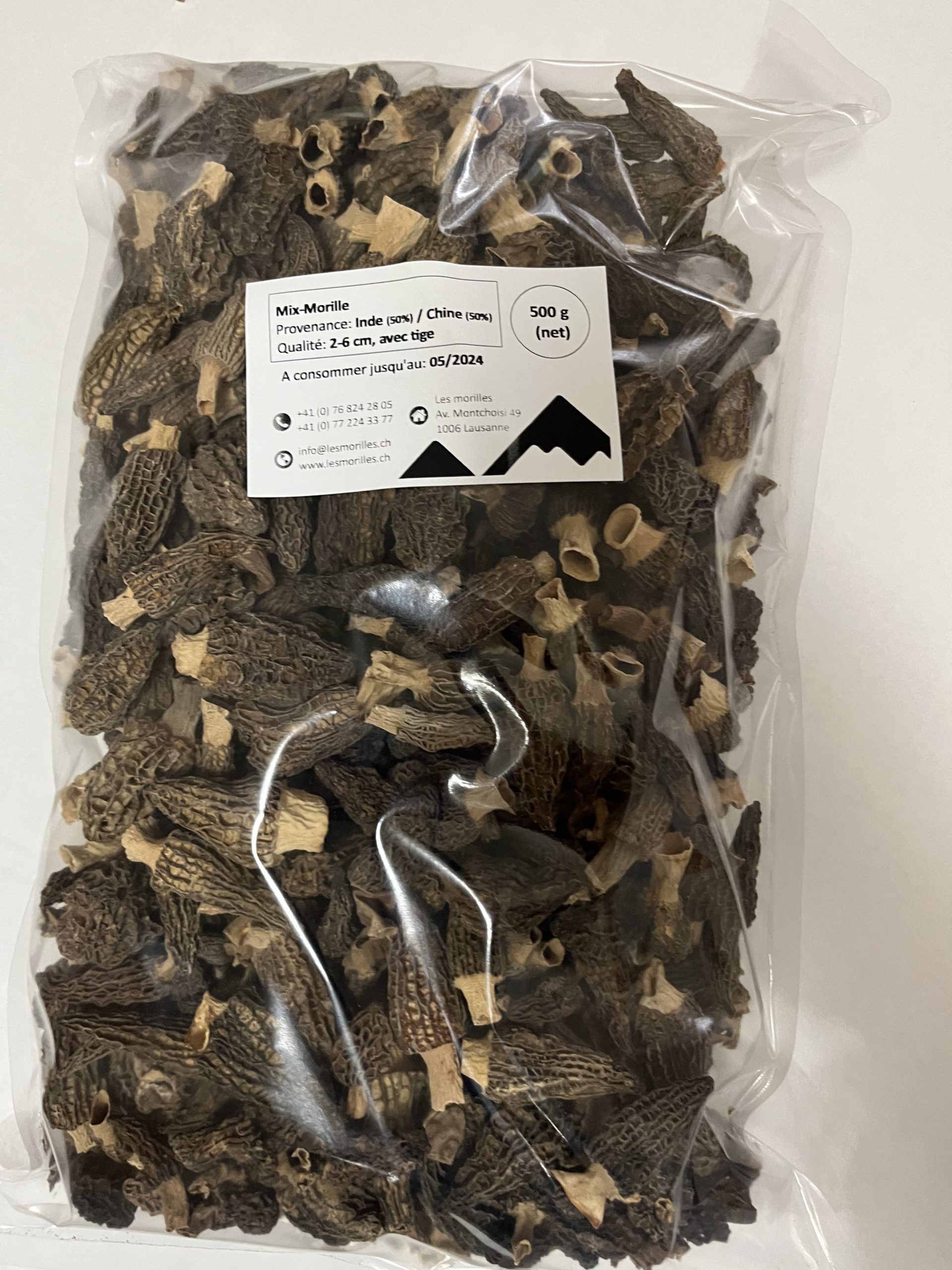
Blog — safety
Why morels are
always eaten cooked
Thermolabile compounds.
Morels, like other wild mushrooms, contain thermolabile compounds. These molecules, mainly haemolysins and irritant proteins, are destroyed by heat. At room temperature or below 70 °C, they remain active and can cause:
- Digestive disorders (nausea, vomiting, diarrhoea).
- Irritation of the oral and intestinal mucous membranes.
- Allergic reactions in sensitive individuals.
These compounds are present in all morels, whether wild or cultivated, dried or fresh. Cooking is therefore mandatory, even for morels that have been previously dried.
Temperature and cooking time.
In Switzerland, the reference is clear: at least 20 minutes of cooking, and this applies even to dried morels that have been rehydrated — rehydrating is not cooking. In practice:
- Boiling or steaming. Bring water to a boil and keep the morels in it for 20 minutes. Drain before use.
- Pan-frying or baking. Ensure an even temperature throughout the morel. For large Sichuan morels (8-10 cm), extend the cooking time by 5 minutes.
- Soaking water. If used in a sauce, bring it to a boil for 20 minutes before incorporating it.
Insufficient cooking leaves the compounds active, even if the morel appears cooked on the surface. Never eat morels raw or undercooked, even in small quantities.
Impact of cooking on texture and flavour.
Cooking alters the structure of morels and releases their aromas:
- Texture. Raw morels are firm and brittle. Cooking softens them, giving them a melting texture while retaining a slight crunch. Overcooking makes them soft and less pleasant in the mouth.
- Flavour. Heat reveals the woody notes of Himalayan morels, or the milder aromas of Anatolian morels. Cultivated Sichuan morels develop a more subtle flavour, which pairs well with stuffings.
- Colour. Rehydrated dried morels regain a brown-grey hue. Cooking darkens them slightly without altering their appearance.
Mistakes to avoid.
- Cooking at too high a heat. Risk of hardening the morels or burning them on the surface before they are cooked through.
- Adding salt too early. Salt draws water out of the morels and can make them rubbery. Salt at the end of cooking.
- Mixing with acidic ingredients before cooking. Vinegar or lemon can alter the texture. Add them after cooking.
- Using soaking water without cooking. Even when filtered, it contains thermolabile compounds. Always bring it to a boil.
Special cases.
Stuffed morels. Sichuan morels (size 8-10 cm) are often stuffed. The stuffing must be pre-cooked before being placed in the morel. The final cooking of the stuffed morel must last at least 15 minutes at 180 °C (in the oven) to ensure an even temperature.
Morels in sauce. If morels are added to a sauce at the end of cooking, ensure they have been pre-cooked separately for 20 minutes.
Source of the cooking time: Swiss recommendation reported by RTS on 29 January 2026, based on Toxinfo Suisse (No. 145) and Patrick Edder, cantonal chemist of Geneva — "they must be cooked sufficiently, at least 20 minutes", including for dried morels that have been rehydrated.
Further reading
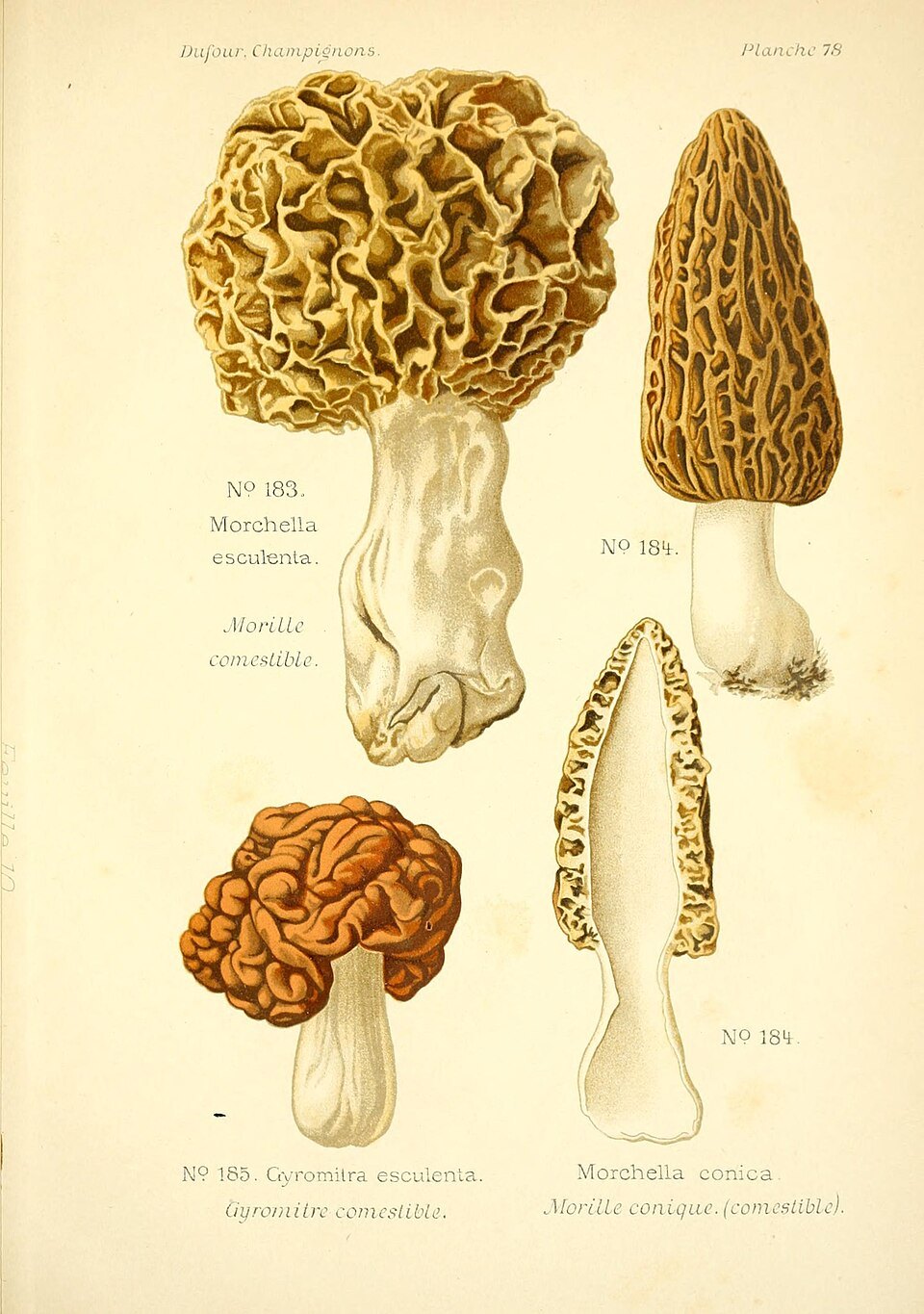
Morel or
false morel?
Pits versus brain-like folds, single cavity versus partitioned interior: how to identify the Gyromitra, and why cooking does not make it safe.
Read →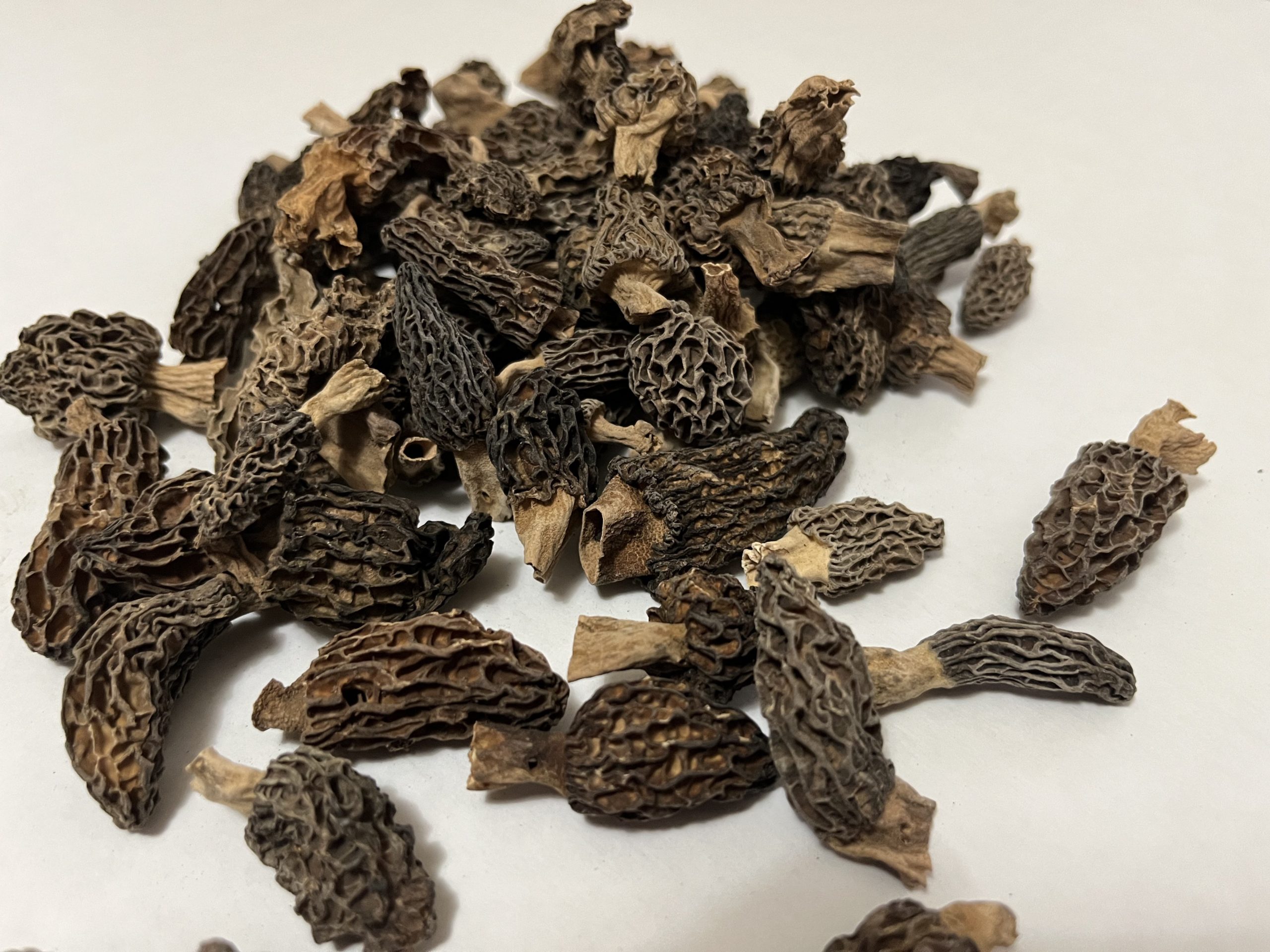
Rehydrating dried
morels
Detailed method for rehydrating dried morels in 20 to 30 minutes, with soaking water filtration and aroma preservation. Food safety included.
Read →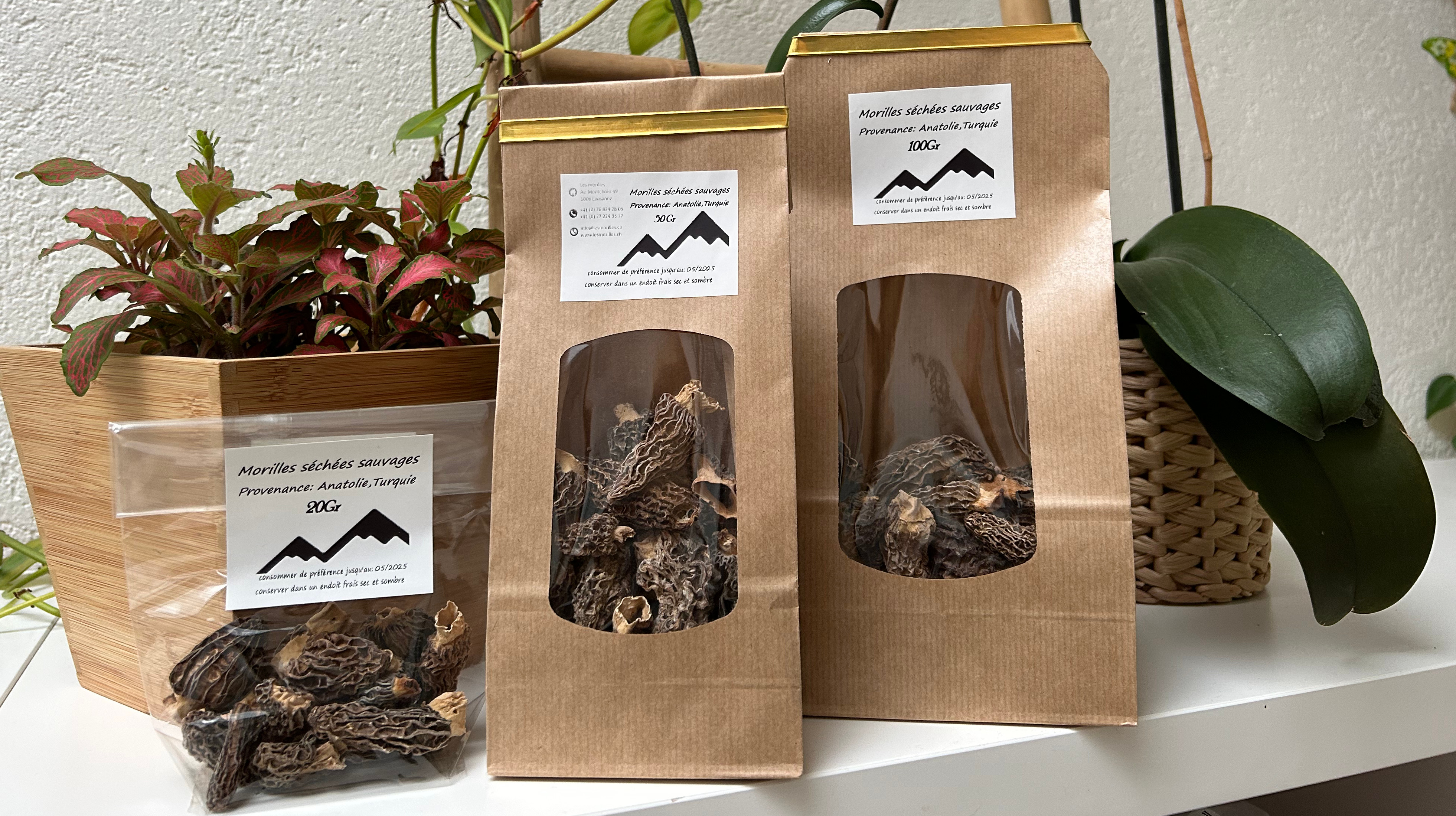
Storing dried
morels
Methods for storing dried morels away from moisture and light. Shelf life, signs of degradation and common mistakes.
Read →