
Blog — storage
Storing your dried morels
without loss
Optimal storage conditions.
Dried morels keep for a long time if protected from three enemies: moisture, light and heat. Here are the ideal conditions:
- Temperature. Between 10 and 20 °C. Avoid sudden temperature changes.
- Humidity. Below 60%. High humidity softens morels and encourages mould growth.
- Light. Keep away from direct light, especially sunlight. UV rays alter flavours and colour.
- Odours. Morels absorb surrounding odours. Store them away from strong spices, chemicals or aromatic foods.
Storage equipment.
The container must preserve the quality of the morels:
- Glass jar. Prefer a jar with an airtight seal, such as a jam jar with a rubber gasket. Glass does not retain odours and protects against moisture.
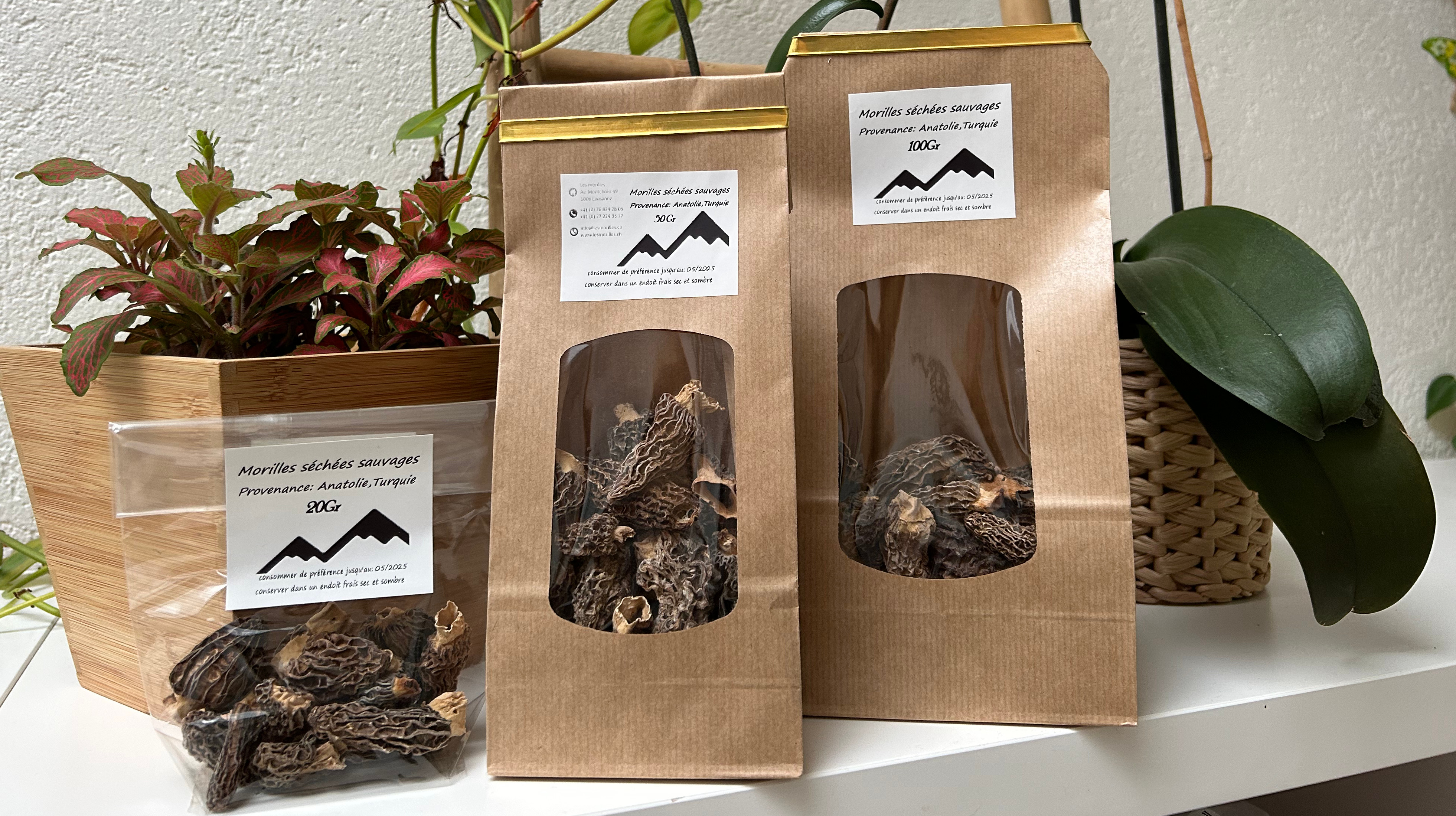
- Kraft paper bag. Less effective than a jar, but useful for short-term storage (a few weeks). Avoid plastic bags, which encourage condensation.
- Metal tin. A tin box with a tight-fitting lid is suitable, provided it is clean and odour-free.
- Vacuum pouch. Ideal for long-term storage. Best for large quantities, as once opened, the pouch loses its effectiveness.
Whatever the container, place it in a dry, cool, dark place, such as a kitchen cupboard or cellar.
Storage duration.
Dried morels can be stored for:
- 12 to 18 months under optimal conditions (airtight jar, away from light and moisture).
- 6 to 12 months in a kraft paper bag or non-airtight box.
- 3 to 6 months if the container is regularly opened or poorly sealed.
Beyond 18 months, morels gradually lose their flavour and texture, even if they remain edible. Do not consume morels that show signs of mould or an unusual odour.
Signs of deterioration.
Regularly check the condition of the morels. Here are the signs that indicate deterioration:
- Mould. Appearance of white, green or black spots, often accompanied by a musty odour. Discard the batch immediately.
- Softening. Morels become soft or sticky to the touch. This indicates moisture absorption. If the phenomenon is recent, dry them again in an oven at 50 °C for 1 hour, then place them in an airtight container.
- Loss of flavour. Morels no longer have their characteristic odour. They remain edible, but their taste will be less pronounced.
- Presence of insects. Small holes or powdery traces indicate an infestation. Discard the batch and thoroughly clean the container before reuse.
- Colour change. Discolouration or brown spots may indicate oxidation due to light or air. The morels remain edible, but their quality is impaired.
Common mistakes.
- Storing in a plastic bag. Plastic encourages condensation and mould growth. Avoid at all costs.
- Placing near a heat source. A stove, radiator or nearby oven speeds up the deterioration of morels.
- Frequently opening the container. Each opening exposes the morels to ambient humidity. Quickly take what you need and close immediately.
- Not checking the condition of the morels. Regular inspection allows early detection of deterioration signs and appropriate action.
- Mixing different batches. Morels from different origins (Himalaya, Anatolia, Sichuan) have distinct flavours. Store them separately to avoid odour transfer.
Reviving poorly stored morels.
If the morels have absorbed some moisture but show no signs of mould:
- Spread them on a baking tray lined with greaseproof paper.
- Place them in an oven preheated to 50 °C for 1 hour, with the door slightly open to allow moisture to escape.
- Let them cool completely before placing them in an airtight container.
This method extends their storage life by a few months but does not restore lost flavours.
Further reading
Rehydrating dried
morels
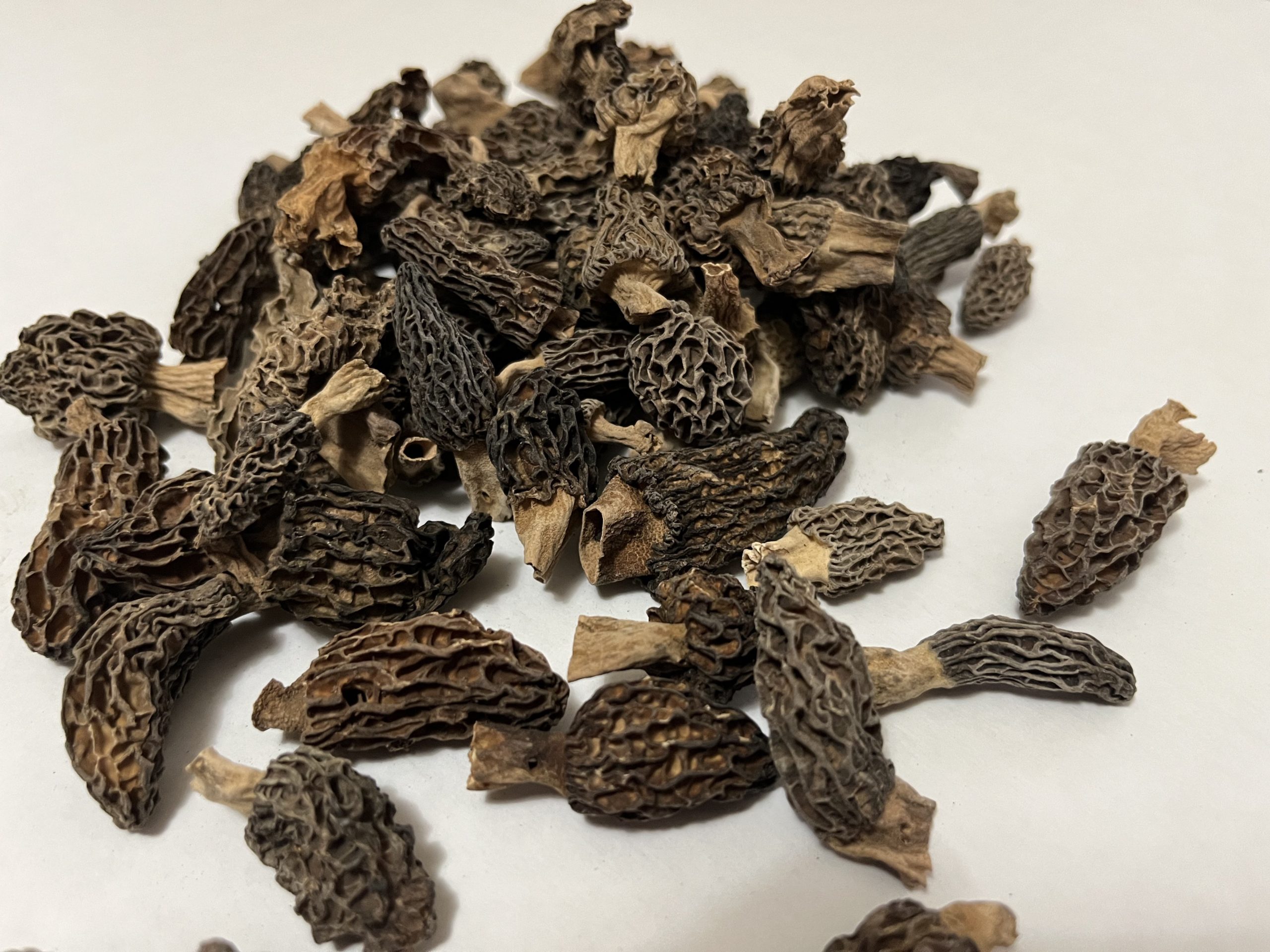
Detailed method for rehydrating dried morels in 20 to 30 minutes, with soaking water filtration and aroma preservation. Food safety included.
Read →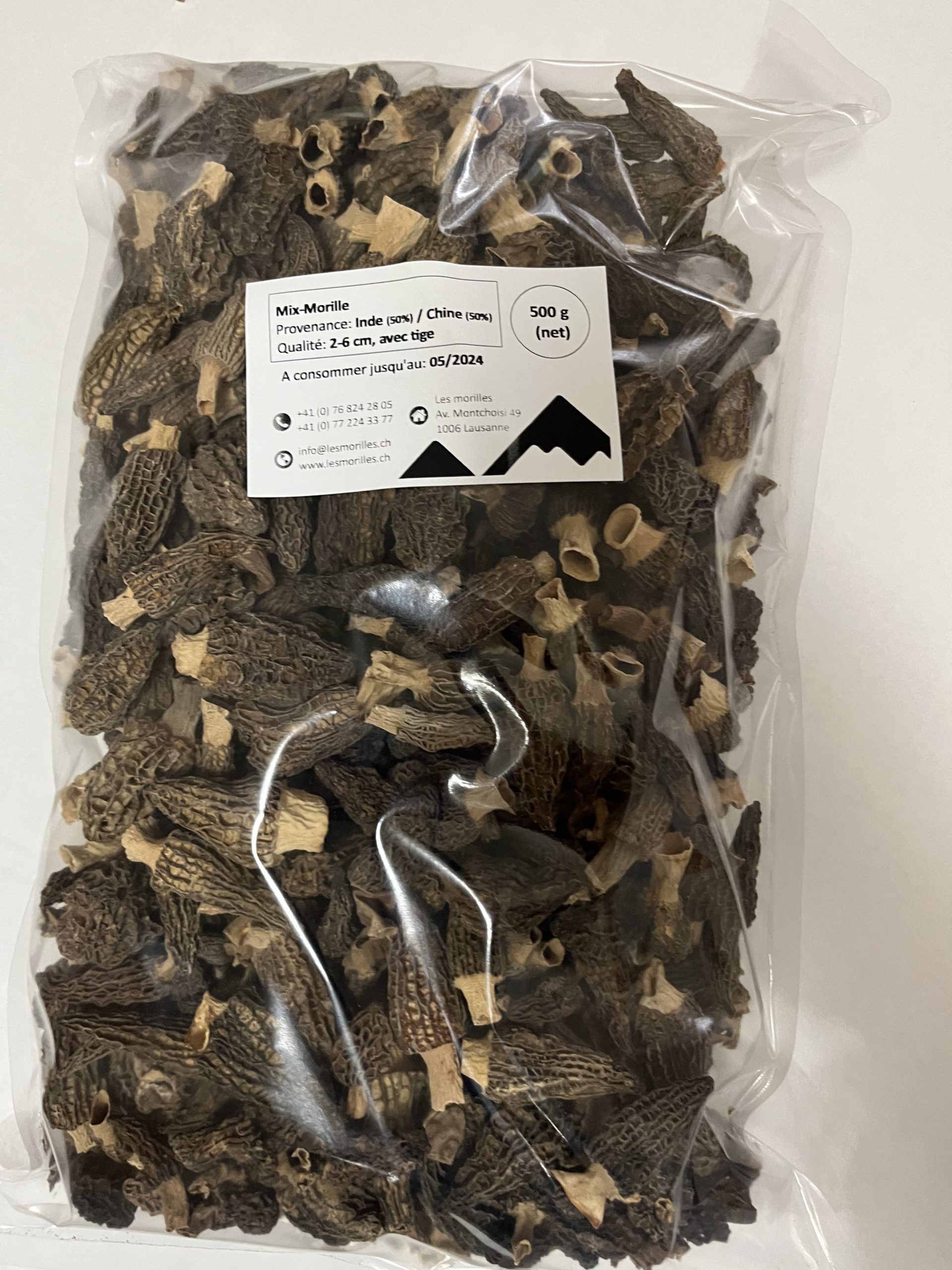
Safety: why
cook morels
Morels contain thermolabile compounds, destroyed by cooking. Here is why they are always eaten cooked — and how cooking affects their texture and aroma.
Read →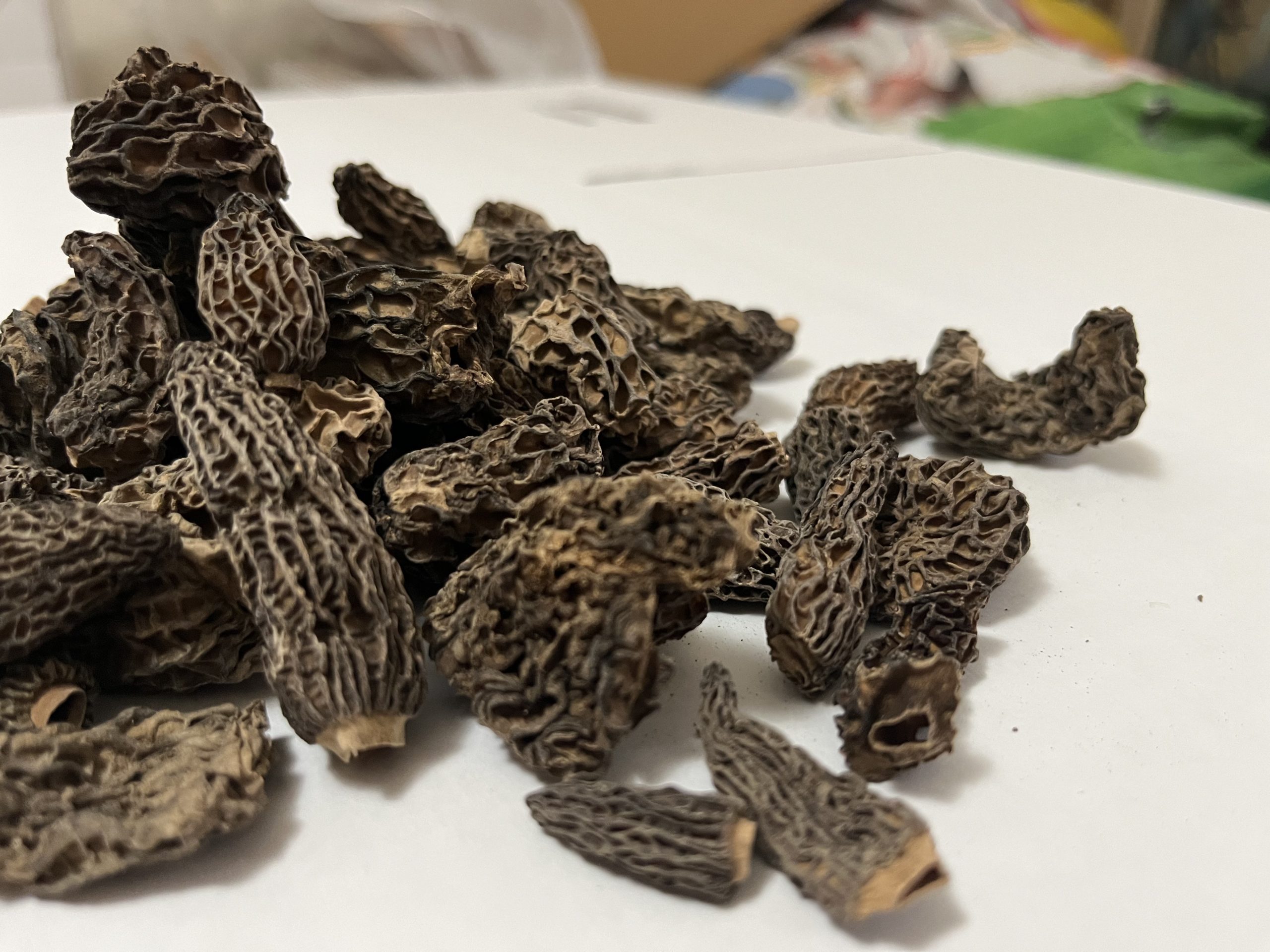
Nutritional values
280 calories, 13.2 g of protein, 14.8 g of fibre per 100 g — what dried morels really contain.
Read →