Blog — safety
Morel or false morel?
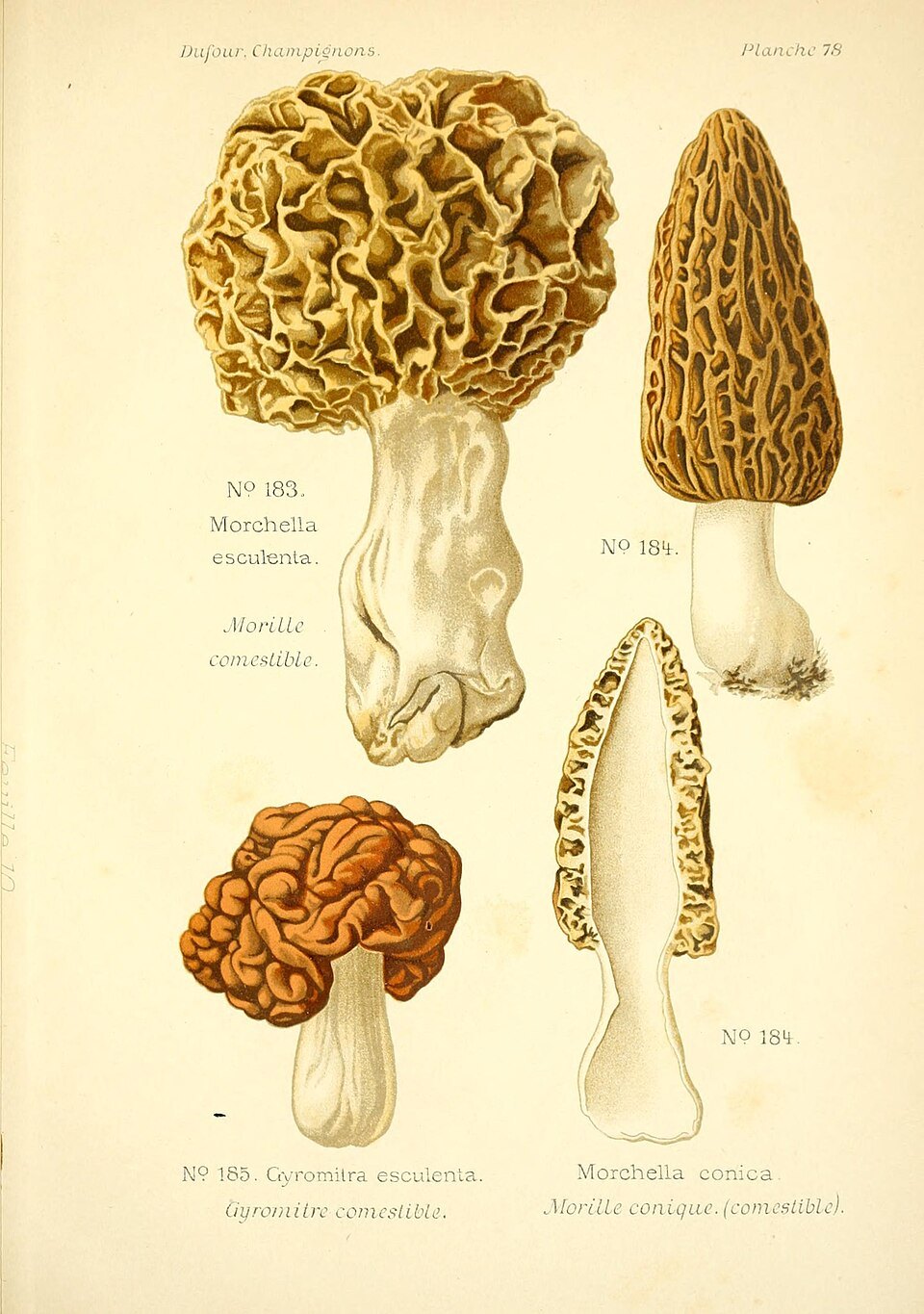
In spring, two mushrooms look similar enough to deceive a hurried eye: the morel (Morchella) and the Gyromitra (Gyromitra esculenta), also called the false morel. The first is a prized delicacy. The second is toxic and should never be eaten.
The cap: pits or brain-like folds.
- The morel has a cap with pits: regular hollows separated by distinct ridges, like a honeycomb. Its base is fused to the stem.
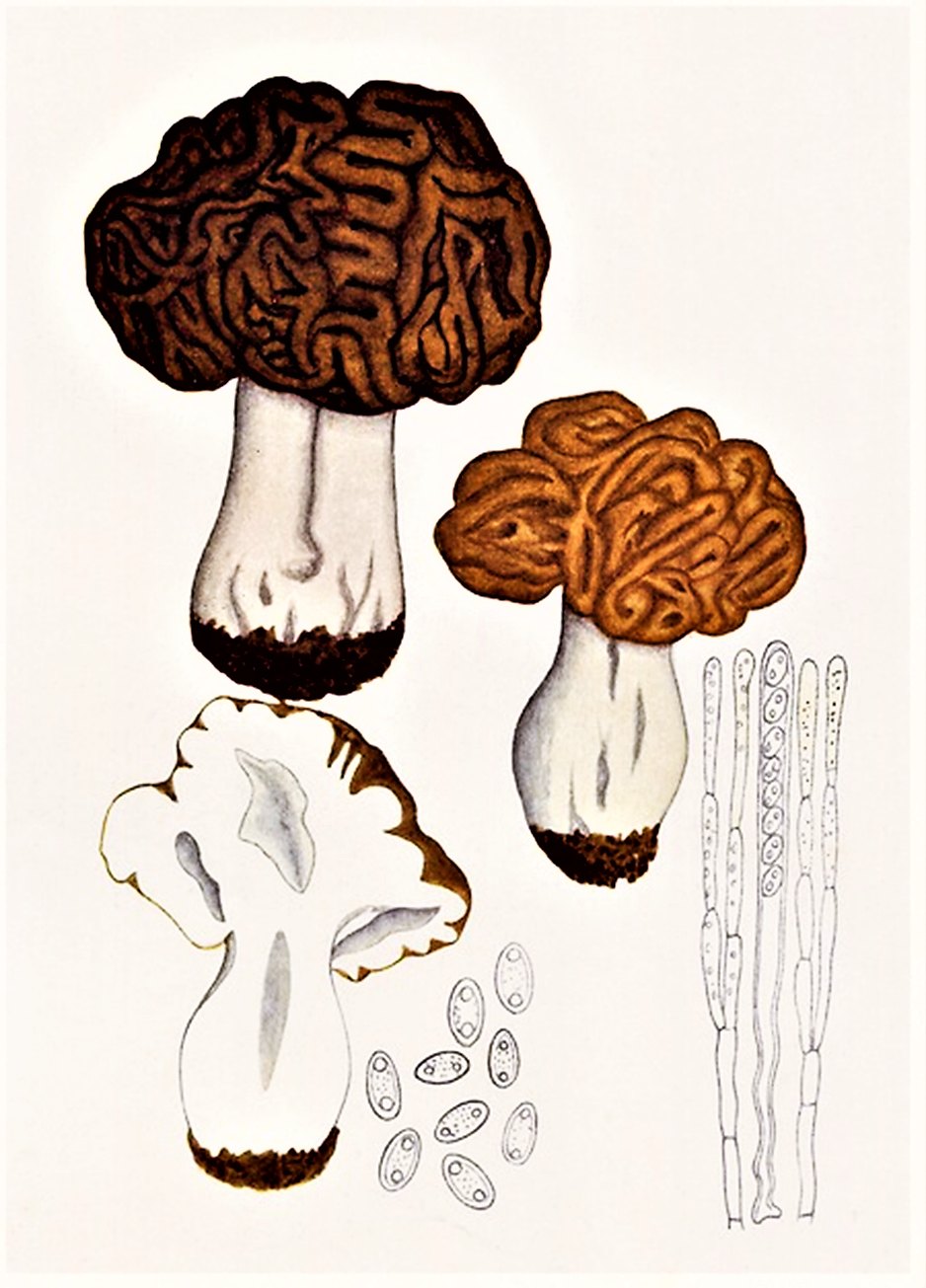
- The Gyromitra has no pits. Its cap consists of irregular folds, resembling a brain, often reddish-brown.
The longitudinal cut: the most reliable test.
Cut the mushroom in half, from top to stem. The morel is hollow in one continuous cavity, from the stem to the top of the cap. The Gyromitra is also hollow, but its interior is irregular, divided into pockets by the folds of the cap.
Habitat: a clue, never proof.
The Gyromitra grows mainly under pines and other conifers, often in mountainous areas, on sandy and acidic soils. The morel is more commonly found under ash trees, fruit trees and other deciduous trees. However, the two can overlap: location alone is never enough to decide; only the shape matters.
Why the Gyromitra is dangerous.
The Gyromitra contains gyromitrin. In the body, it converts into monomethylhydrazine, which destroys vitamin B6 and inhibits the production of a neurotransmitter (GABA). The first symptoms usually appear 4 to 6 hours after eating: nausea, vomiting, abdominal pain. Less commonly: dizziness, delirium, convulsions, coma.
Cooking and drying are not enough. Even in Finland, where the Gyromitra was traditionally eaten after preparation, the food authority advises against it for pregnant or breastfeeding women and children, as the toxin leaves residues despite drying or cooking. The only safe rule: never eat it.
What about the dried morels we sell?
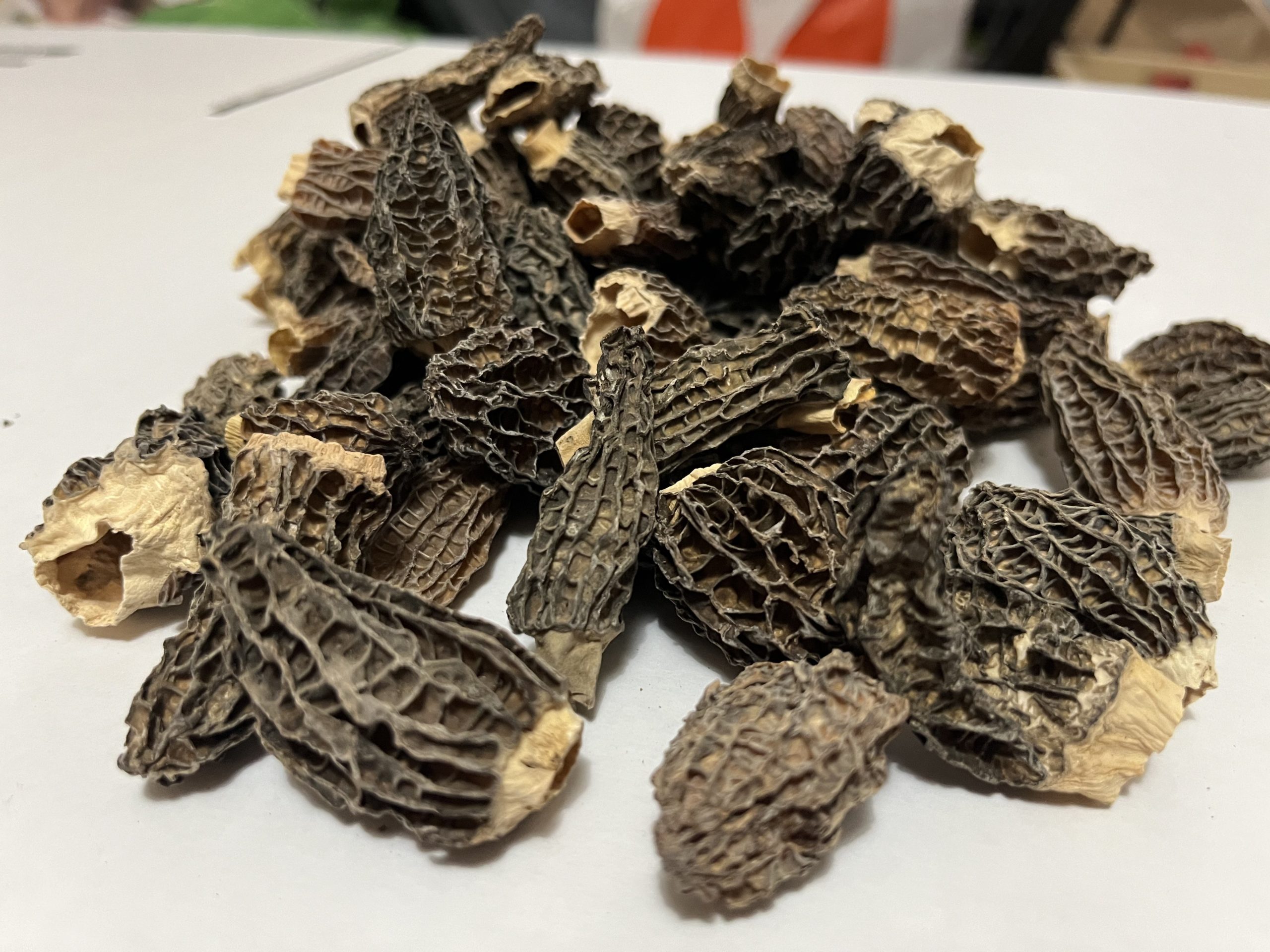
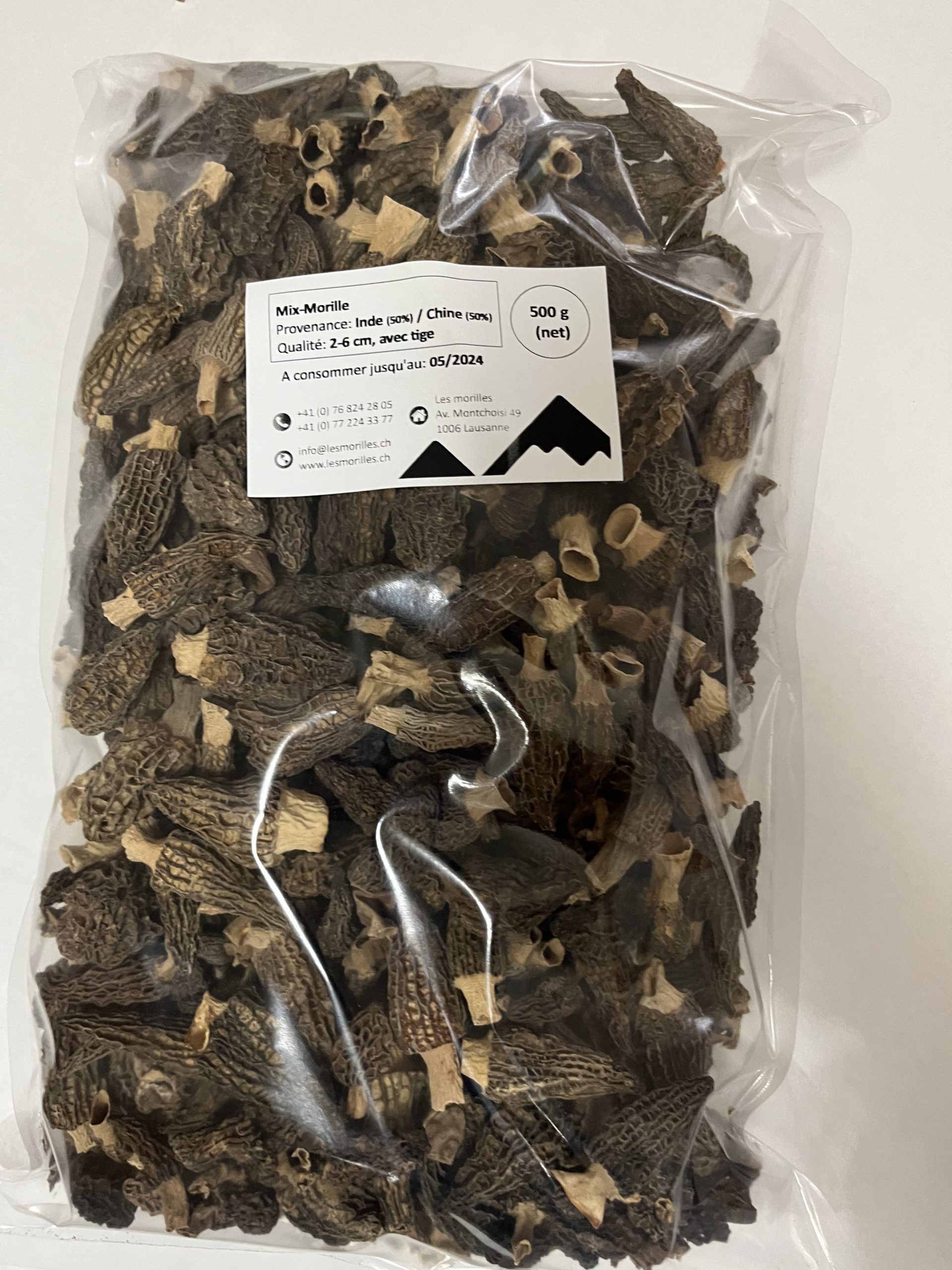
Our morels are dried Morchella, whole: their pits remain clearly visible, and they can be identified by sight. Like all morels, they must be always cooked for at least 20 minutes — as we explain in our article on cooking.
If you forage yourself, have your harvest checked by an official mushroom inspector before cooking. In Switzerland, the list of inspectors is available on the VAPKO website.
Sources: E. Lagrange and J.-P. Vernoux, Toxins, 2020 (gyromitrin, monomethylhydrazine, symptom delay, Finnish recommendation); Société mycologique de Montgeron and aujardin.info (Gyromitra habitat). Plates: Wikimedia Commons, public domain.
Further reading
Safety: why
cook morels
Morels contain thermolabile compounds, destroyed by cooking. Here is why they are always eaten cooked — and how cooking affects their texture and aroma.
Read →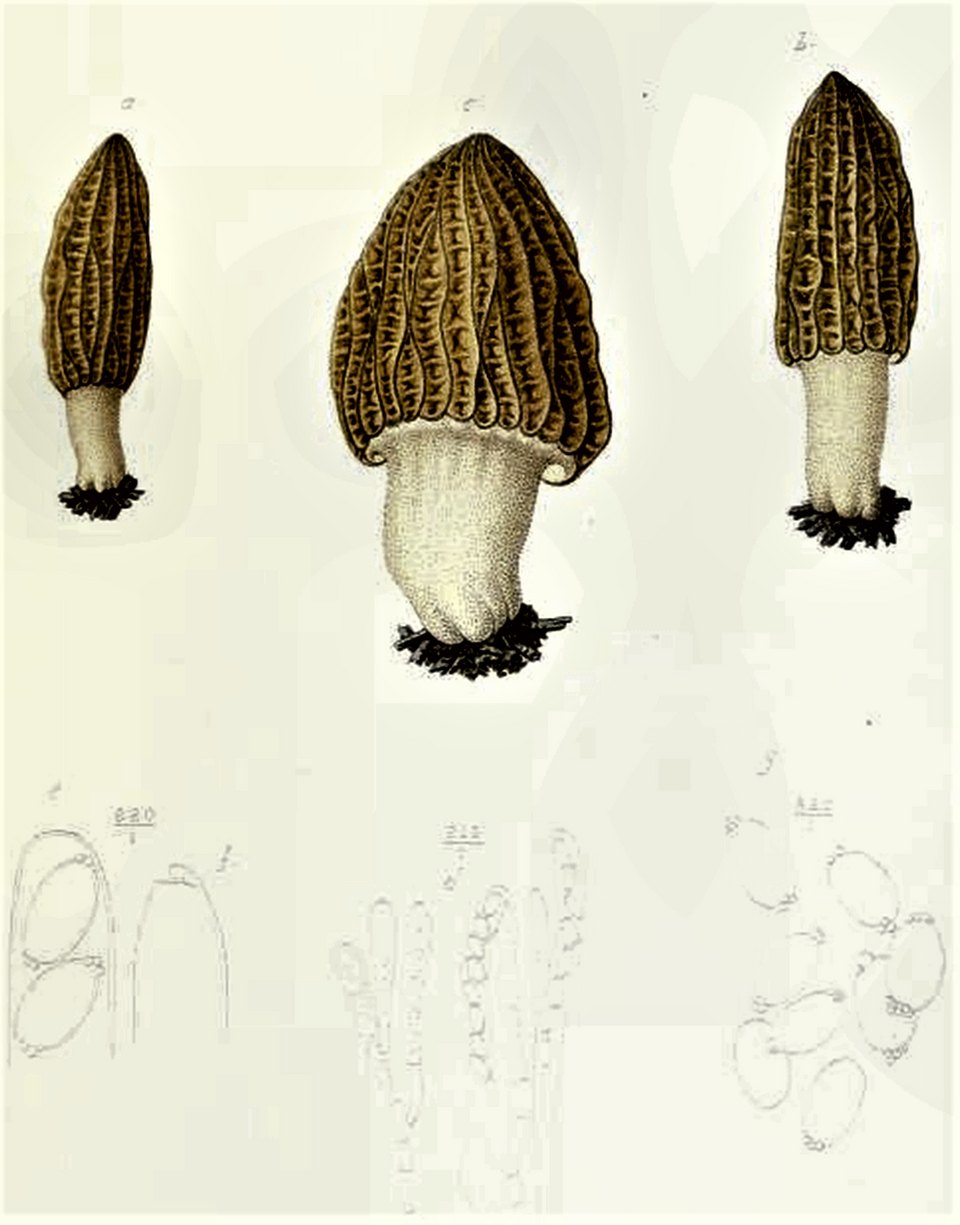
Cultivation
in China
From 200 to 16,466 hectares in ten years, three cultivated species, and a cultivation that is only regularly profitable for 3 out of 10 producers.
Read →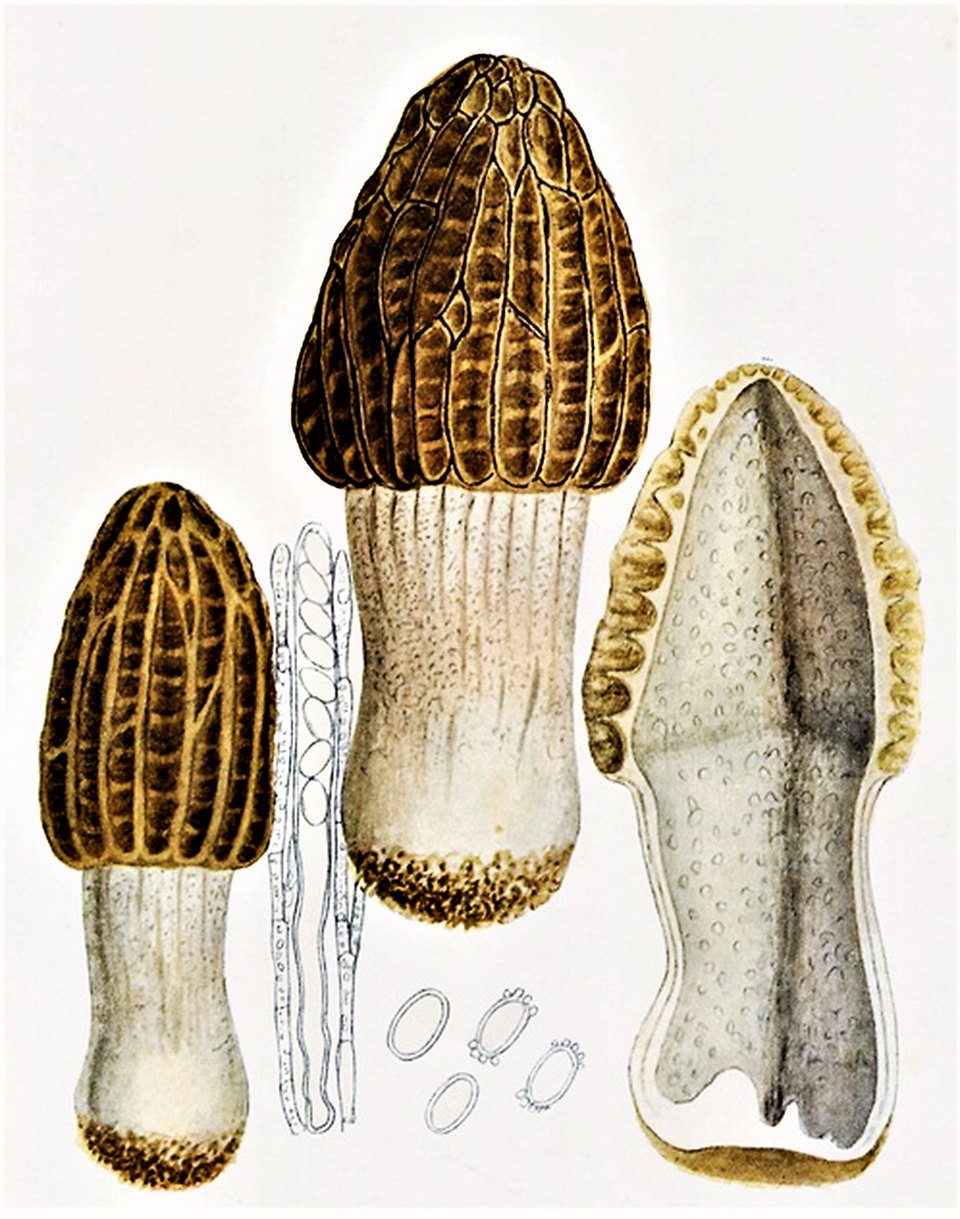
How many
morel species?
Three or four names in cooking, 65 recognised species in 2015, 76 in 2019 — and less than half have a name.
Read →