
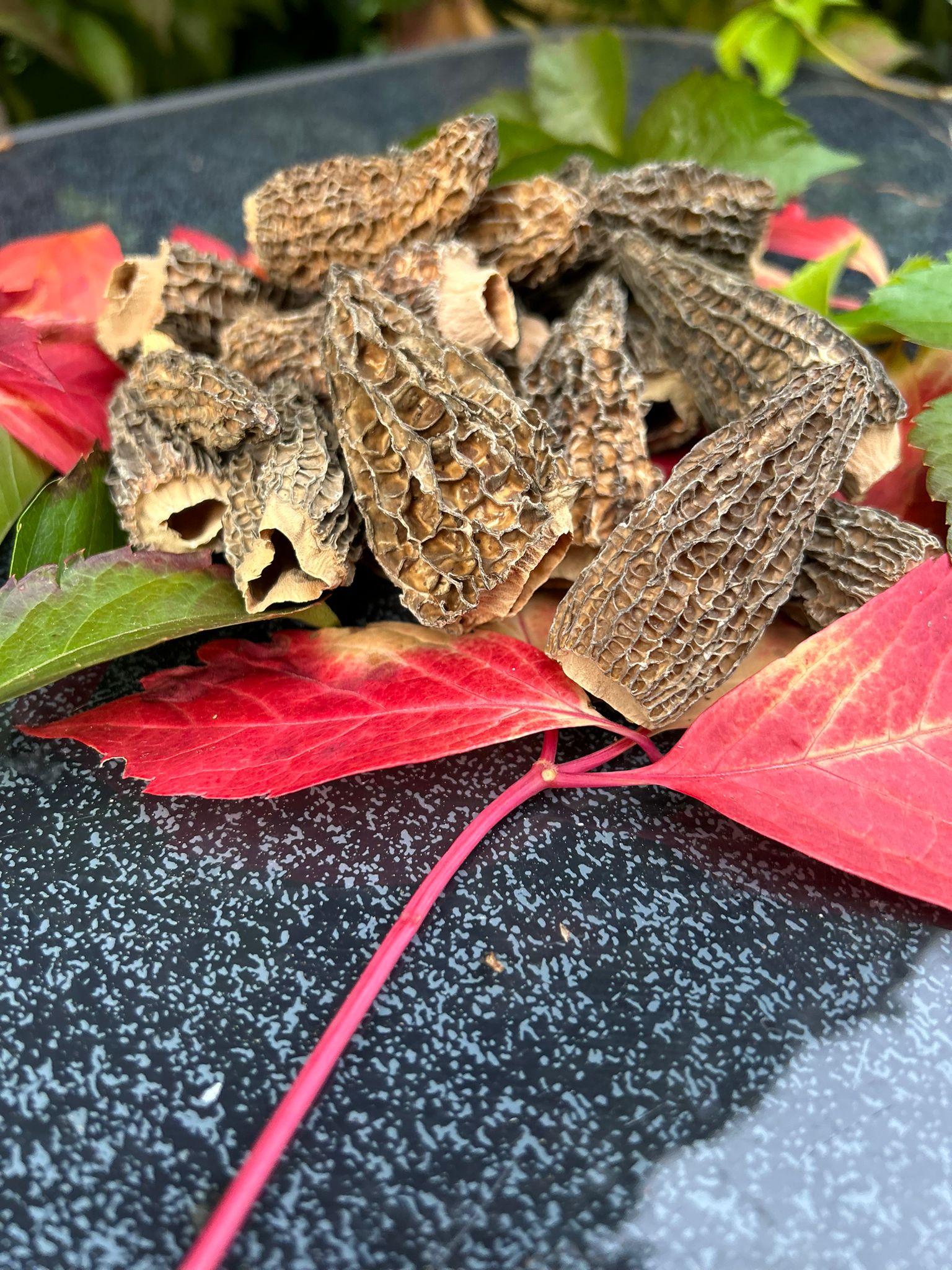
Blog — origins
Cultivated morels,
a Chinese story
For a long time, morels were only found in the wild: they could be foraged but not cultivated. The first successful indoor cultivation trials came from the United States (R. D. Ower), but they remained small-scale. It was in China that morels became an open-field crop.
From Sichuan to the rest of the country.
Between 2000 and 2010, open-field cultivation was developed in Sichuan and Chongqing. By 2012, it had become commercial. The area under cultivation then grew from 200 hectares initially to 16,466 hectares in the 2021-2022 season.
At first, Sichuan, Yunnan and Guizhou accounted for over three-quarters of the cultivated area, particularly in the Chengdu Plain. After 2016, cultivation spread to the Yellow River basin and northern China: in 2021-2022, Shaanxi saw the fastest growth, followed by Henan, Hebei, Shandong and Shanxi.
How they are cultivated.
The morel mycelium is sown in the soil in winter. Nutrient bags are then placed on the surface: they feed the mycelial network developing in the soil, and it is from this network that morels emerge in spring. The method requires a lot of labour, and researchers note that it can leave waste in the fields.
Three species, all black morels.
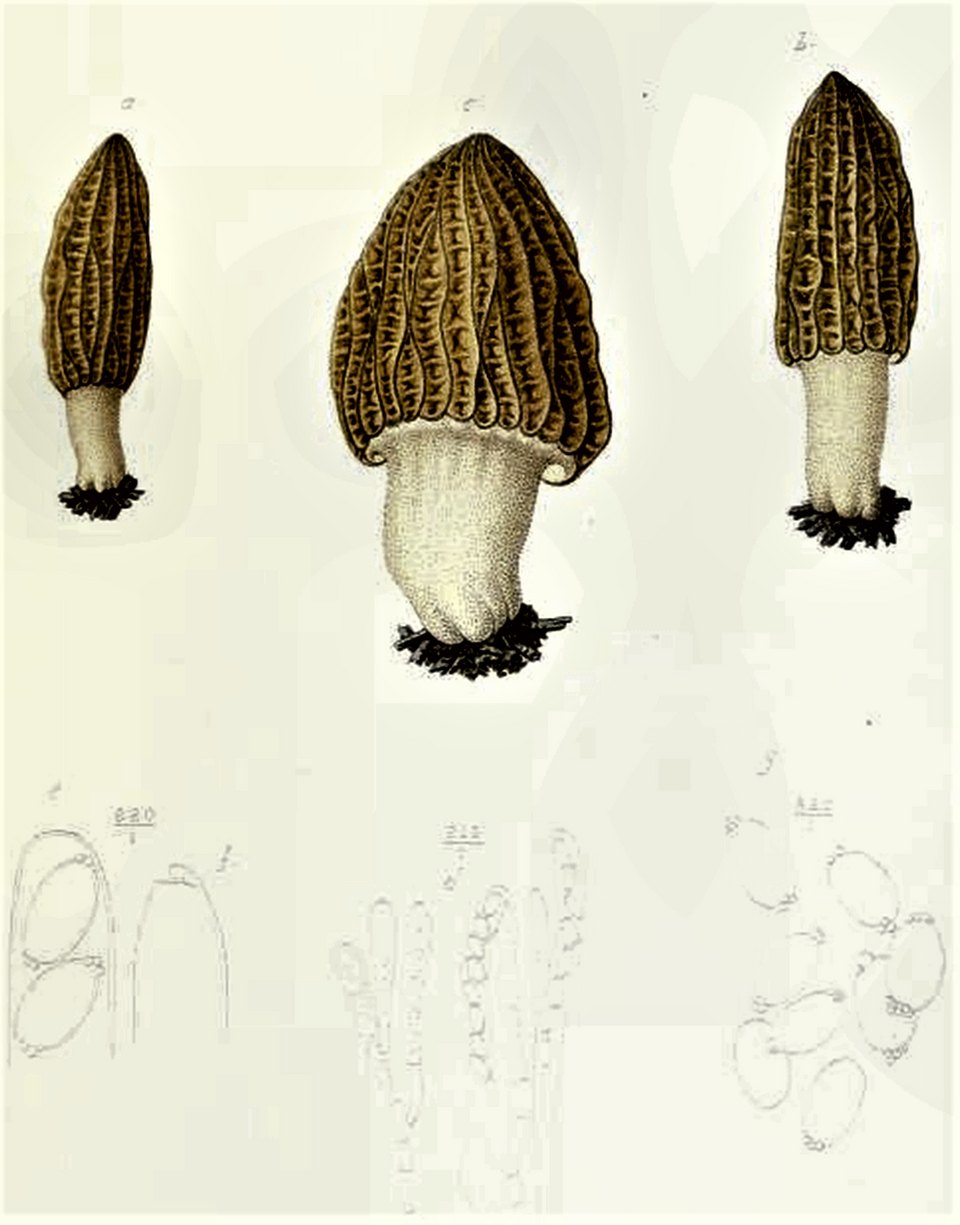
Three species are mainly cultivated: Morchella importuna, Morchella sextelata and Morchella eximia. All three belong to the black morel group. The last was described by the French mycologist Émile Boudier as early as 1910, long before it could be cultivated.
A cultivation that remains challenging.
Morels cannot be cultivated like button mushrooms. According to a 2023 study, only about 30% of producers are regularly profitable. Around 7 out of 10 producers harvest less than 150 grams per square metre, and some lose money in a season. Climate, soil and mycelium quality make the difference from one plot to another.
Our morels from China.
Our morels from China are cultivated morels from Sichuan, the region where this cultivation originated. Large and regular, they are well-suited for stuffing. Like all morels, they must be always cooked for at least 20 minutes.
Sources: W. Liu et al., Journal of Fungi, 2023, 9(8):855 (history, area, provinces, species, profitability, yields); Liu and Dong, Frontiers in Microbiology, 2023 (nutrient bags and their limitations). Plate: Wikimedia Commons, public domain.
Further reading
How many
morel species?
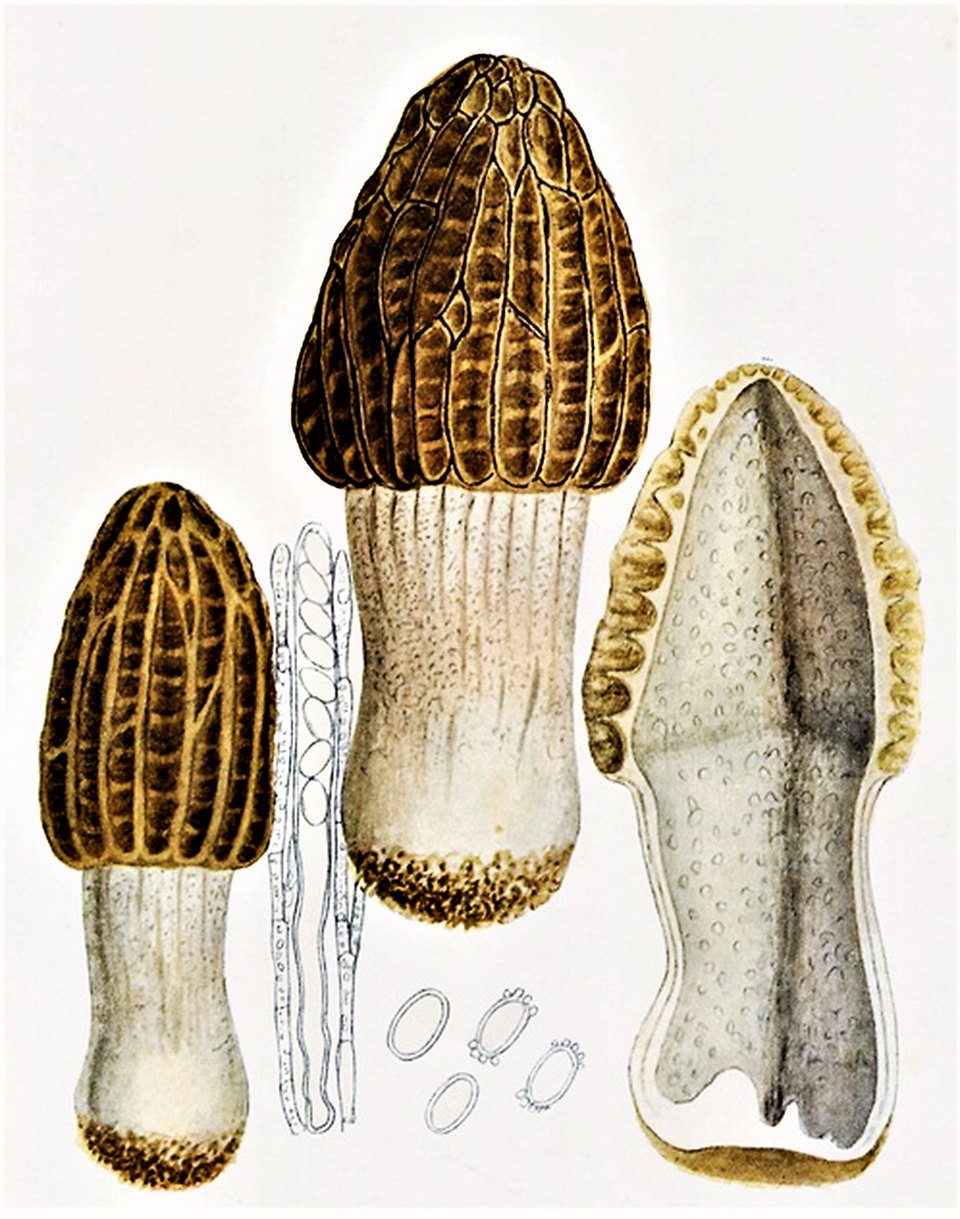
Three or four names in cooking, 65 recognised species in 2015, 76 in 2019 — and less than half have a name.
Read →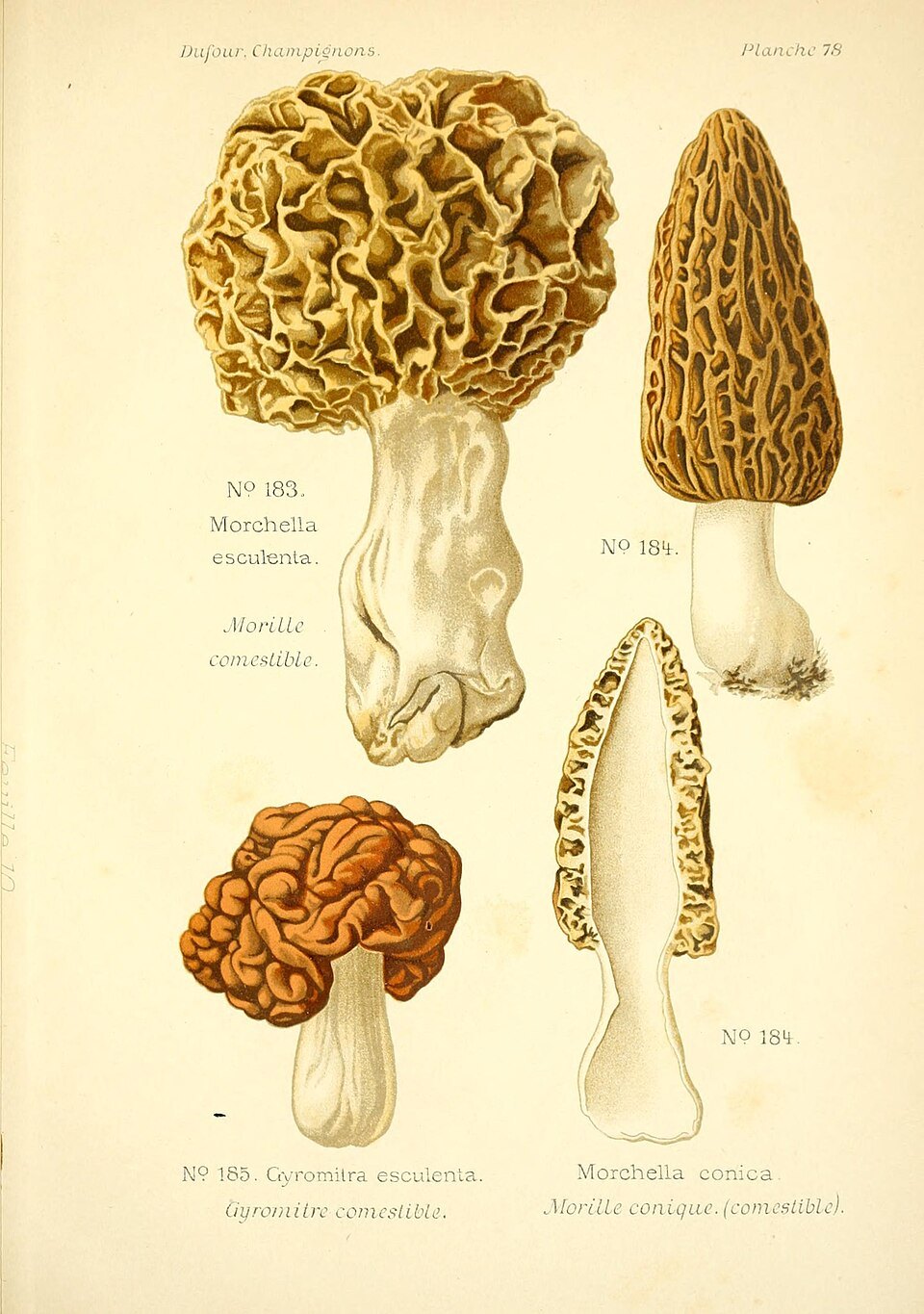
Morel or
false morel?
Pits versus brain-like folds, single cavity versus partitioned interior: how to identify the Gyromitra, and why cooking does not make it safe.
Read →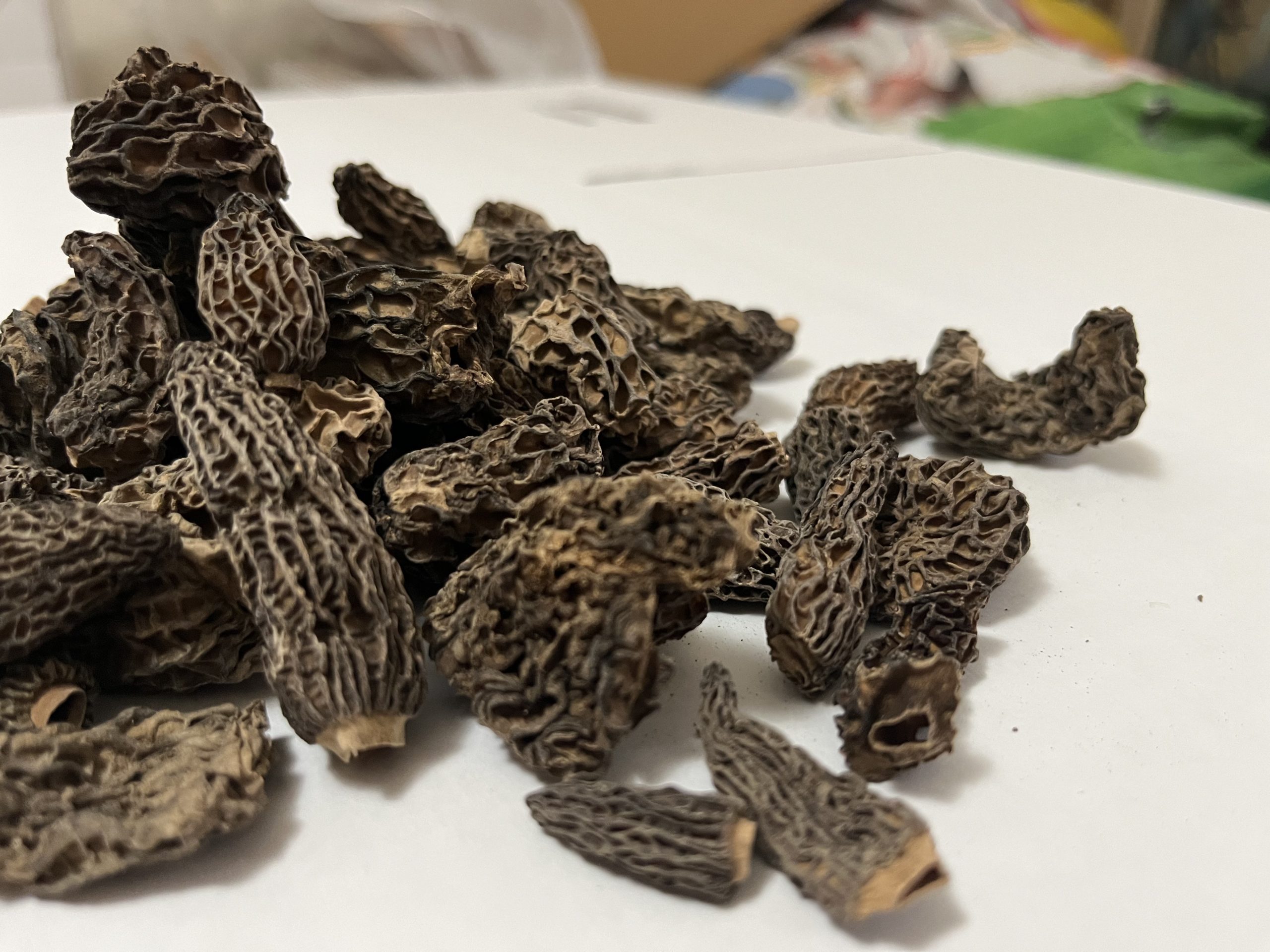
Nutritional values
280 calories, 13.2 g of protein, 14.8 g of fibre per 100 g — what dried morels really contain.
Read →