
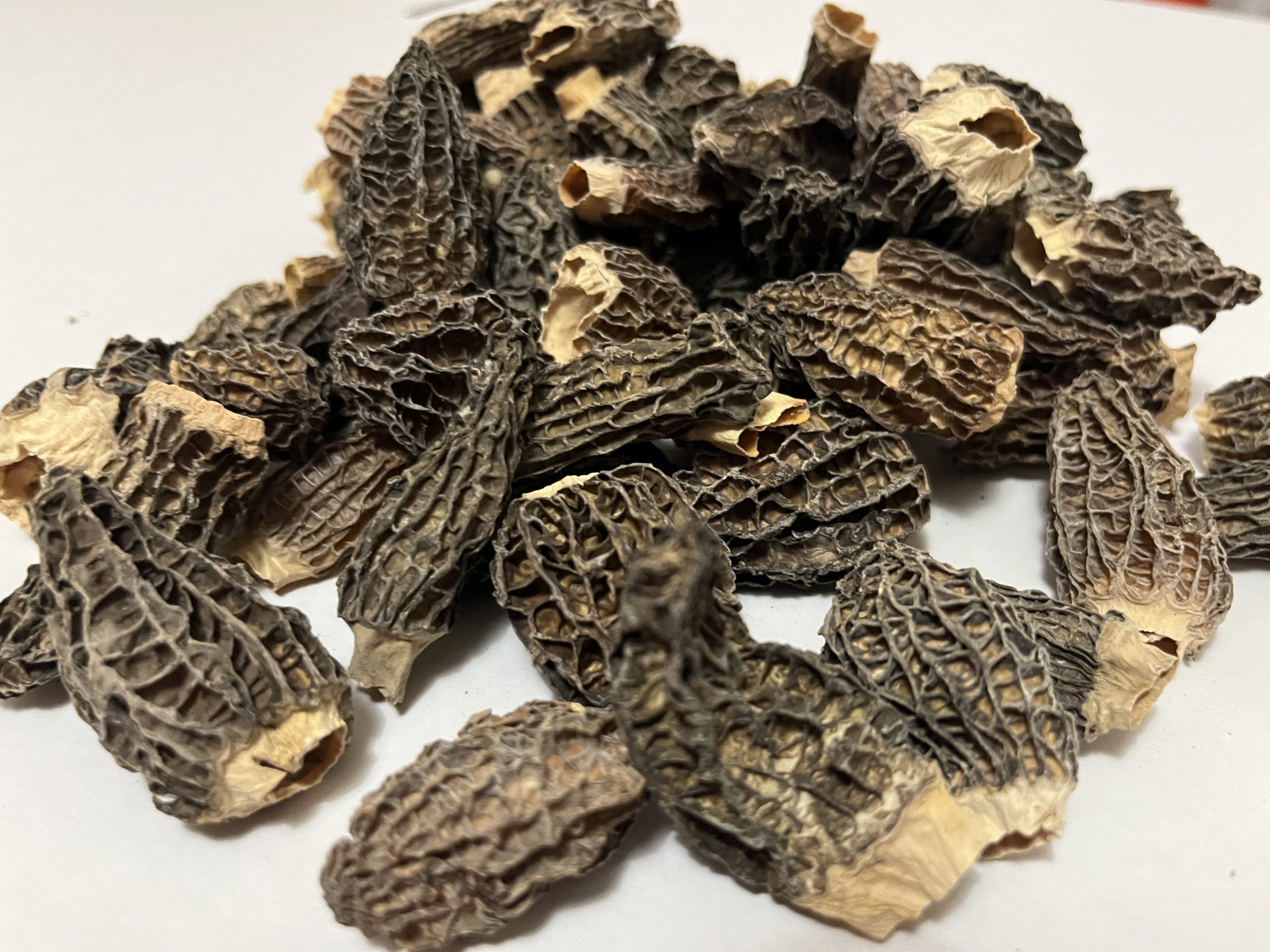
Blog
The morel,
around the world.
Morels are found across almost the entire Northern Hemisphere. Wherever they grow, they have a name — often several.
| Bulgarian | Смръчкула |
| Kashubian | Przëdatny mùrchel |
| Czech | Smrz Jedly · Smrž obecný |
| Dutch | Gewone morielje · Morielje |
| English | Morel |
| Finnish | Pallohuhtasieni |
| French | Morille |
| Macedonian | Смрчка |
| German | Morchel |
| Italian | Spongiola · Spugnola Comune · Spugnola Gialla · Tripetto |
| Japanese | Amigasa Take · アミガサタケ |
| Lithuanian | Valgomasis briedžiukas |
| Norwegian | Rundmorkel |
| Polish | Smardz Jadalny |
| Russian | Smorčok Nastojaščij · сморчок настоящий · Сморчок съедобный |
| Slovak | Smrčok jedlý |
| Slovene | Mavrah |
| Spanish | Cagarria · Colmenilla · Gallarda · Rabassola |
| Swedish | Rund toppmurkla |
| Turkish | Kuzugöbeği |
| Ukrainian | Зморшок їстівний |
Source: list adapted from the former site lesmorilles.ch (21 languages).
Further reading
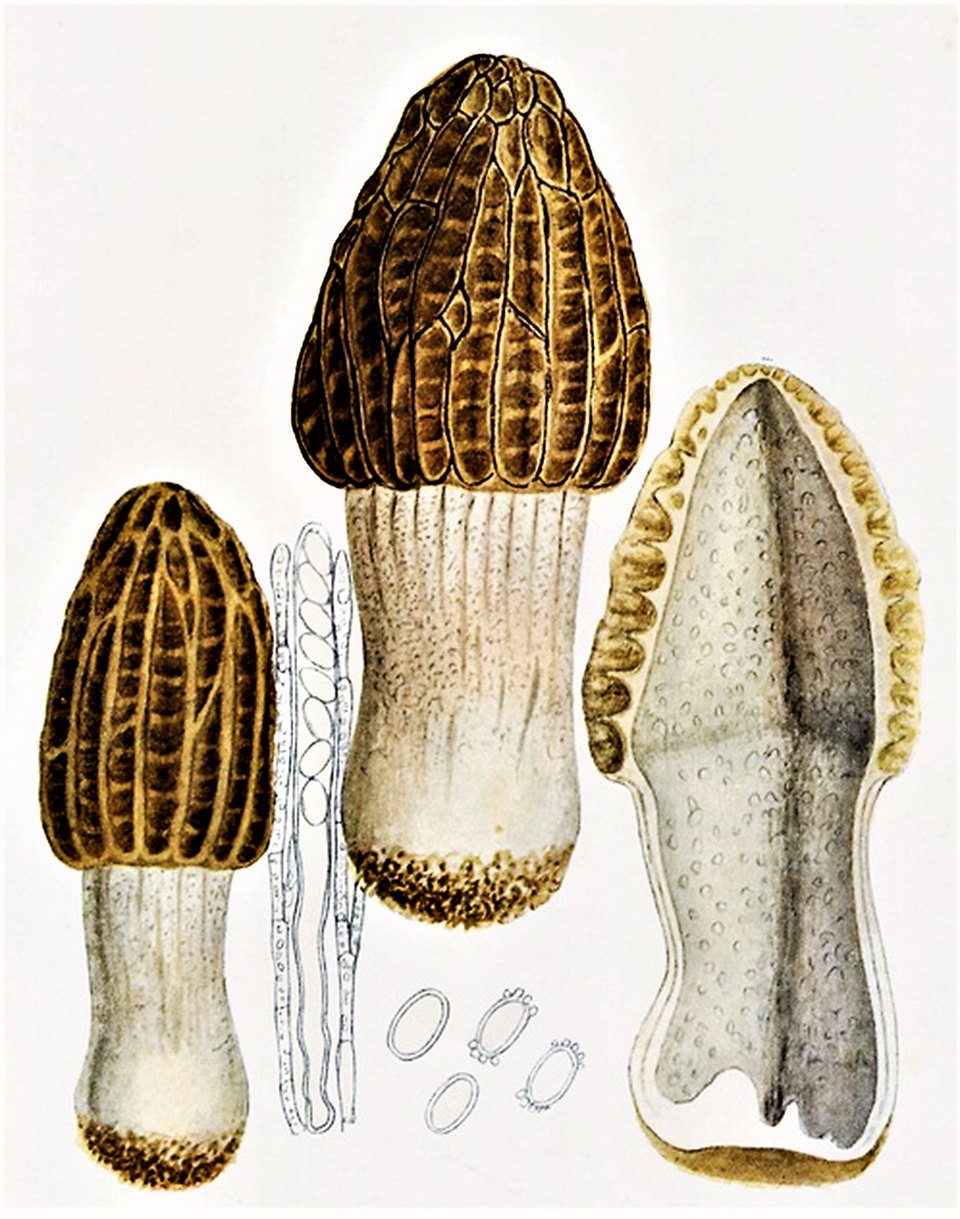
How many
morel species?
Three or four names in cooking, 65 recognised species in 2015, 76 in 2019 — and less than half have a name.
Read →
Cultivation
in China
From 200 to 16,466 hectares in ten years, three cultivated species, and a cultivation that is only regularly profitable for 3 out of 10 producers.
Read →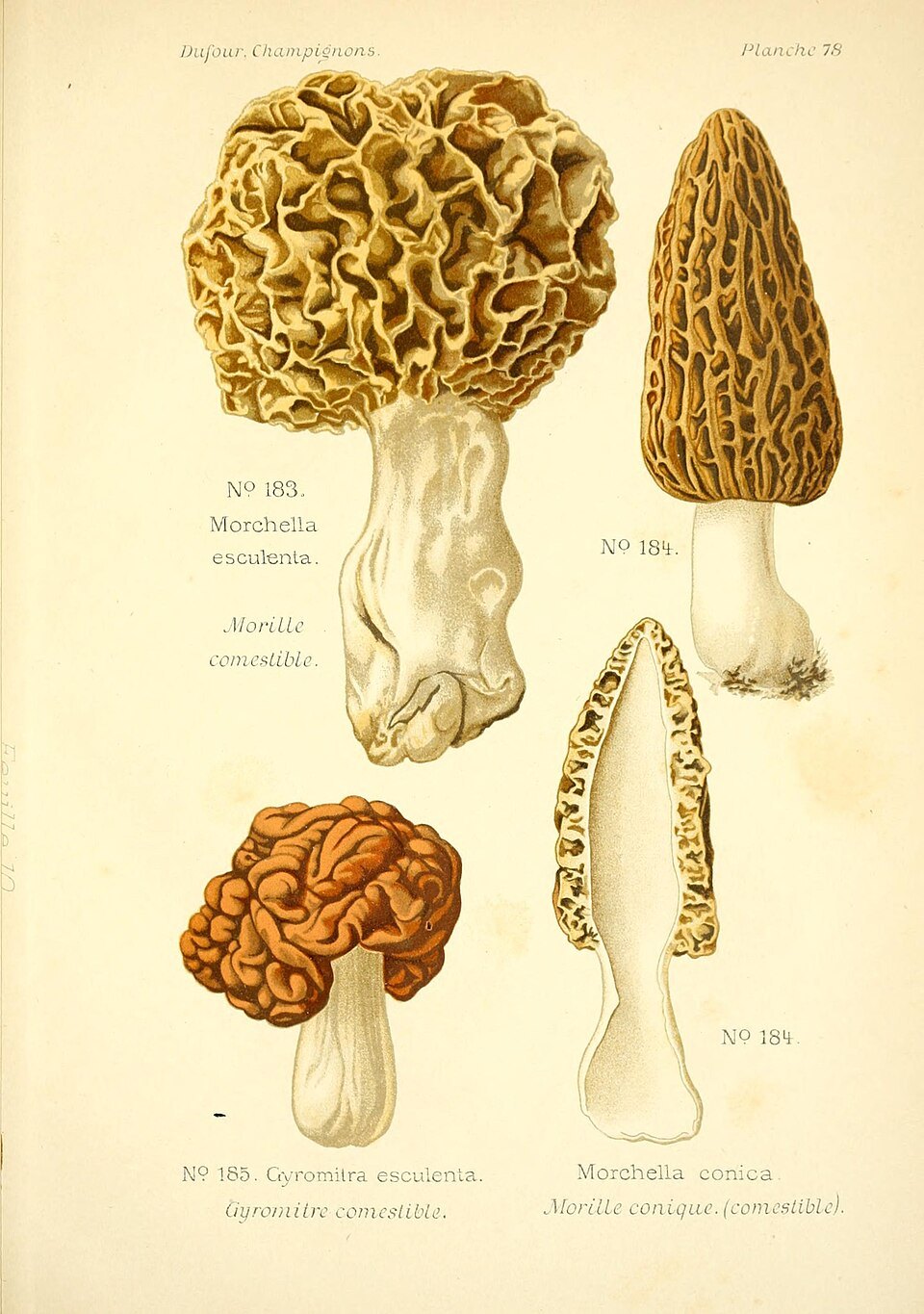
Morel or
false morel?
Pits versus brain-like folds, single cavity versus partitioned interior: how to identify the Gyromitra, and why cooking does not make it safe.
Read →